

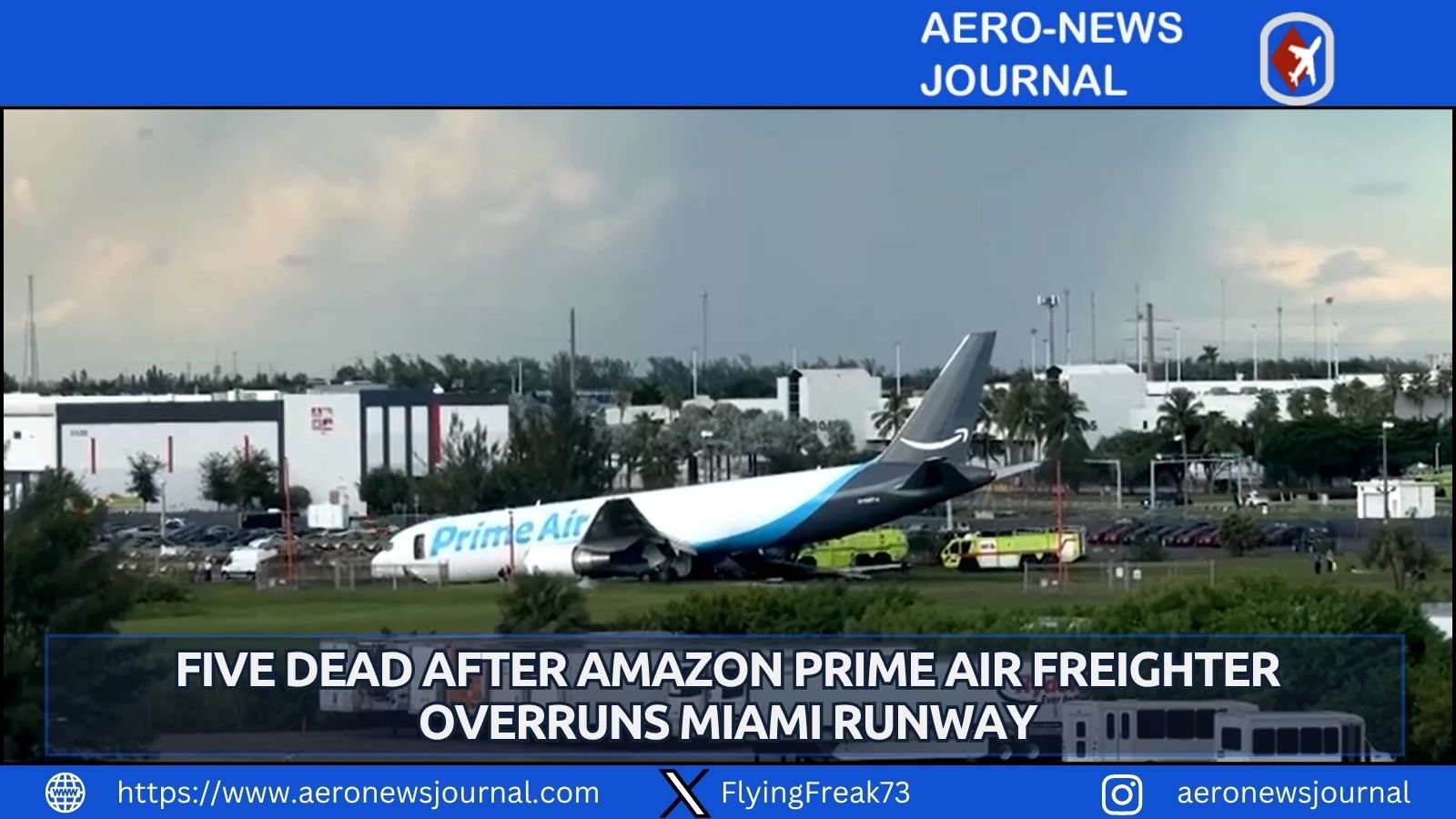
Washington, DC, Sept. 9 – A Boeing 767 cargo jet operating Amazon Prime Air Flight 7598 overran Runway 30 at Miami International Airport on September 6, 2026, after arriving from San Juan, Puerto Rico. The aircraft, flown by contractor 21 Air, traveled approximately 1,300 feet beyond the paved surface, striking navigational equipment before colliding with a Ford van carrying airline cleaning workers and a Toyota vehicle on Northwest 67th Avenue. Five people died, and five others were injured in the runway overrun accident, while both pilots survived. NTSB investigators described the scene as one of extensive wreckage and immediately launched a full probe into the Miami airport cargo plane crash.
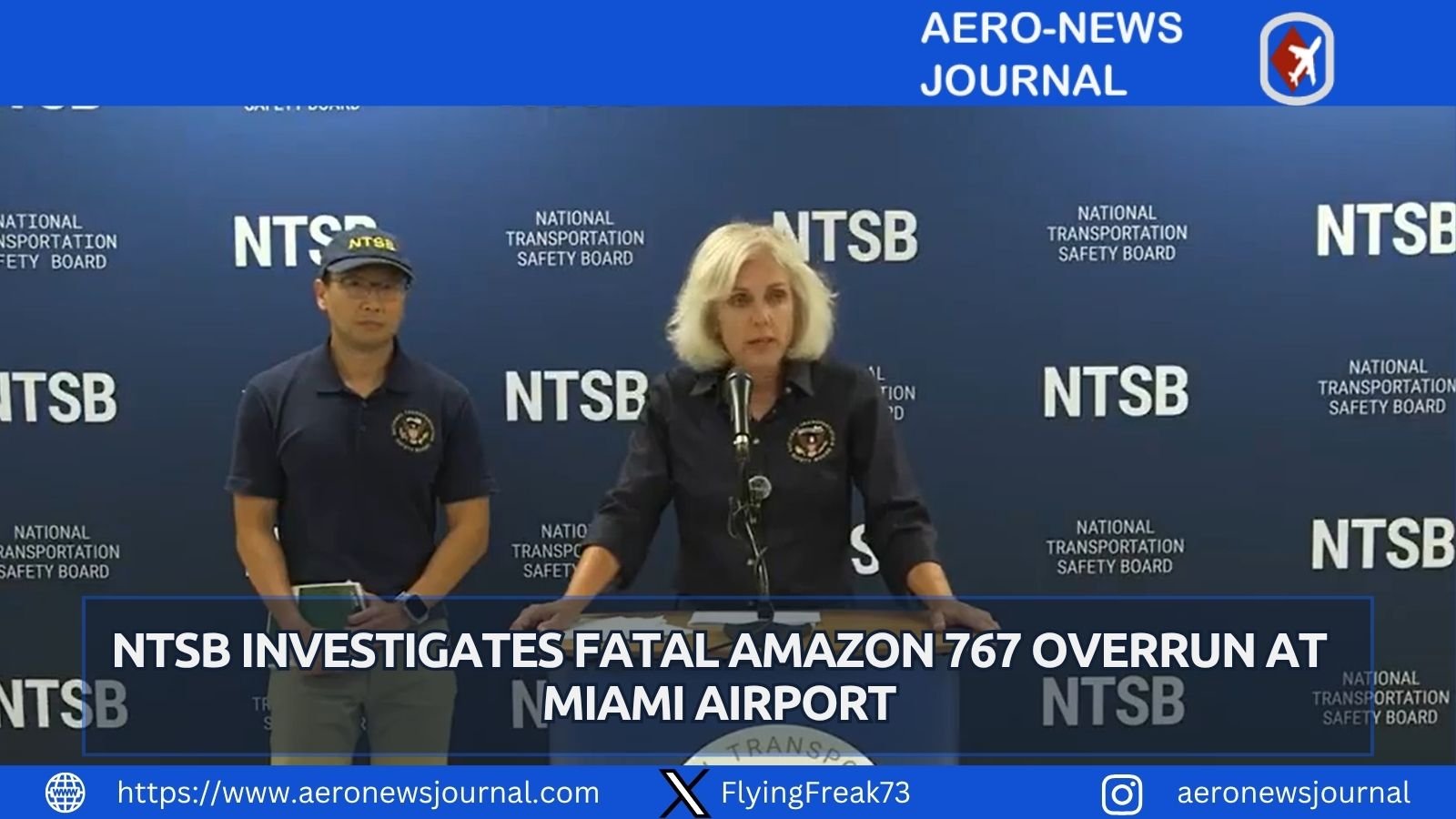
National Transportation Safety Board Chair Jennifer Homendy outlined the path of the converted Boeing 767-300 during a September 7 briefing, confirming the plane first impacted airport infrastructure, then breached the perimeter fence. Federal authorities recovered the flight data recorder and cockpit voice recorder for analysis at NTSB headquarters. Investigators are examining landing speed, touchdown location, braking performance, and stormy weather conditions present that afternoon as possible contributing factors to the deadly runway excursion at Miami International Airport.
Cargo B-767 ended up about 1,300ft (394m) past the runway in the Miami air crash yesterday, revealed Jennifer Homendy, NTSB´s chairwoman, who hosted a media briefing today on the accident.
— Francisco Cunha – ✈️ Aviation et al (@OnDisasters) September 7, 2026
The jet overran the runway, striking navigational aids and equipment, before hitting a… pic.twitter.com/qWOsoFGKSD
A central focus of the NTSB investigation is the absence of an Engineered Materials Arrestor System, or EMAS, at the end of Runway 30. These crushable concrete beds installed at more than 100 United States airports are designed to slow aircraft that overrun runways and reduce impact forces. Homendy stated that EMAS effectiveness will form a key part of determining whether additional safety infrastructure could have limited the distance traveled by the Amazon cargo plane after leaving the runway pavement.
The NTSB is also reviewing contractual safety responsibilities between Amazon and 21 Air, the North Carolina-based cargo operator that flew the 32-year-old aircraft. Recovery operations continued as two of four runways remained restricted, affecting Labor Day weekend operations. Officials have not released a probable cause, emphasizing that a thorough examination of weather, aircraft systems, crew actions, and airport design will precede any final report on the Miami International Airport Boeing 767 accident.