

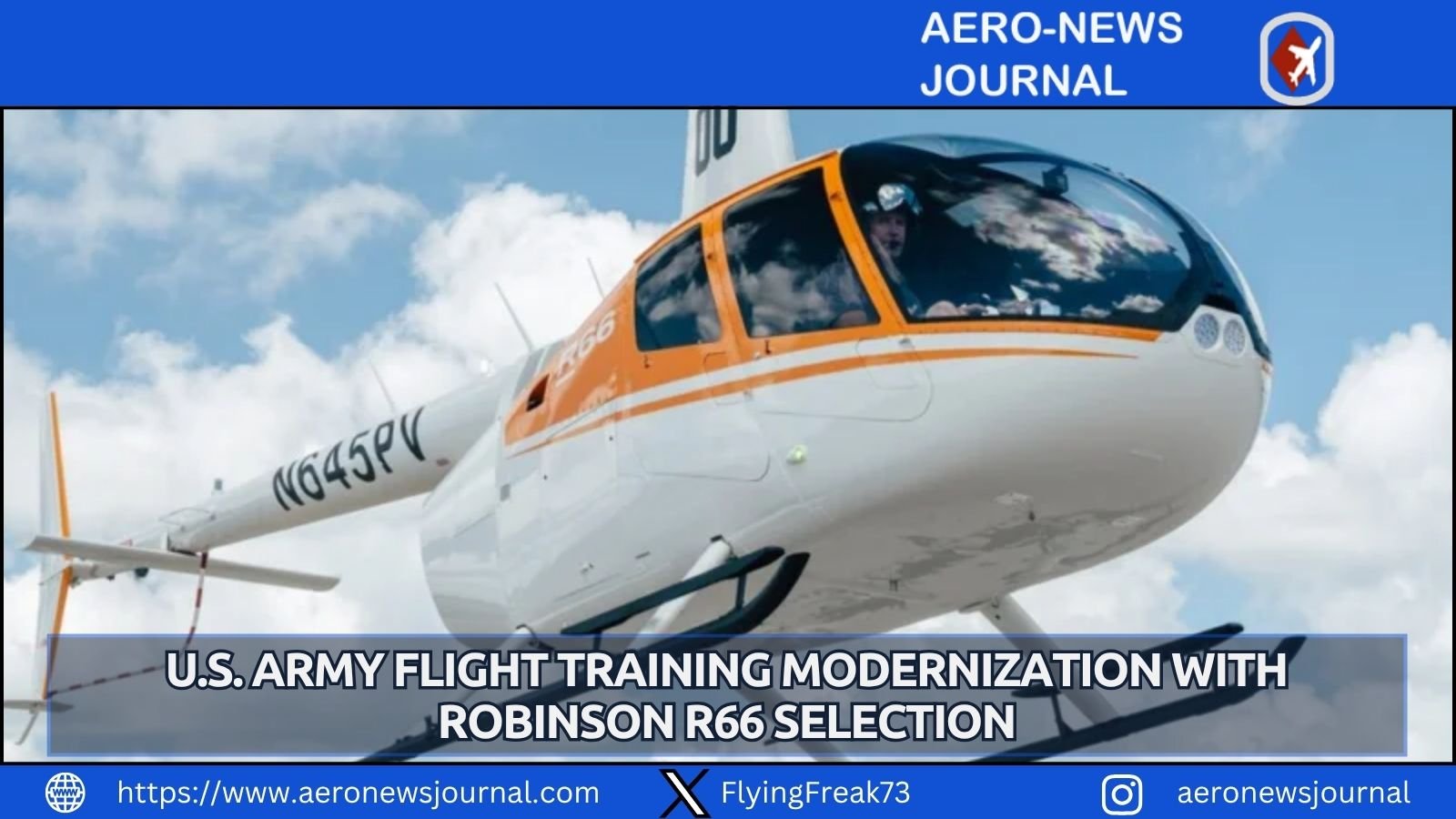
Washington, Aug. 16 – The United States Army has officially launched a transformative shift in its pilot instruction by awarding a massive $10 billion contract for the Flight School Next initiative. This multi-decade endeavor, which could span up to 26 years, signals a move toward a contractor-owned, contractor-operated training model designed to enhance efficiency and throughput at Fort Rucker, Alabama. M1 Support Services secured this competitive contract, ultimately choosing the Robinson R66 turbine helicopter as the core platform to replace the long-serving Airbus UH-72A Lakota, effectively overcoming strong rival bids from major aerospace manufacturers like Bell.
The selection of the Robinson R66 represents a strategic commitment to innovation-rich education that maintains high safety and proficiency standards.
By integrating the Robinson R66 into its rotary-wing training syllabus, the Army aims to focus on building foundational pilot skills through a more cost-effective and simplified aircraft design. The R66, known for its reliability and lower direct operating costs, will support an increased annual production of 800 to 1,500 new Army aviators. This transition reflects the military’s broader goal to optimize training performance while ensuring that the next generation of pilots is equipped with the necessary expertise to handle diverse operational environments with precision and professional confidence.
The implementation of Flight School Next will occur in phases, with a gradual transition from current systems over the next four years. M1 Support Services will oversee a comprehensive ecosystem that includes advanced flight simulators, academic instruction, and maintenance of the R66 fleet. This holistic approach is expected to streamline the training lifecycle and improve accountability. By leveraging the R66’s proven performance and robust American-made supply chain, the service anticipates sustained operational availability, allowing for high-tempo training cycles that meet demanding modern military standards.
Ultimately, the selection of the Robinson R66 represents a strategic commitment to innovation-rich education that maintains high safety and proficiency standards. Army officials believe this overhaul provides a critical improvement to the Initial Entry Rotary Wing program, delivering significant long-term fiscal savings. As the program scales toward full integration, the integration of cutting-edge simulation technology alongside the R66 platform will ensure that the U.S. Army continues to produce highly capable, proficient aviators ready to serve across the global force, effectively cementing a new era for military flight instruction.