

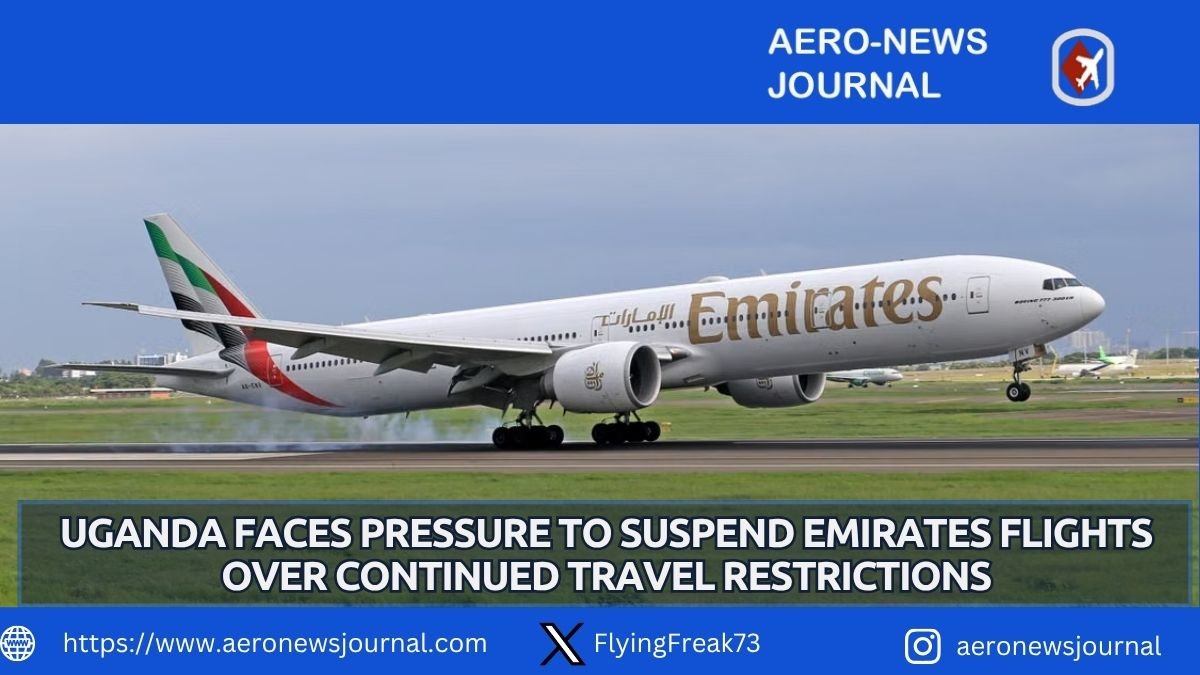
Kampala, Aug. 11 – The Ugandan government is currently under intense pressure to impose a retaliatory ban on Emirates flights operating into Entebbe International Airport. This escalating situation follows the prolonged implementation of travel restrictions by the United Arab Emirates against Ugandan nationals, which were originally established in response to an Ebola outbreak. Despite Uganda’s Ministry of Health officially declaring the country Ebola-free on July 28, 2026, international travel barriers remain firmly in place. Consequently, prominent figures within the Ugandan tourism and aviation sectors are advocating for decisive government action, arguing that the UAE should not continue to profit from access to Uganda’s aviation market while simultaneously denying Ugandans the freedom to conduct business and travel to Dubai.
The contentious restrictions, introduced by the UAE on June 6, include the suspension of new visas for Ugandan citizens and limitations on entry for those recently arriving from the region. While these measures were once linked to public health concerns, the continued enforcement now appears disproportionate to the actual health status of the nation. Industry leaders emphasize that these persistent hurdles are severely stifling trade and tourism, hindering the vital economic connections that rely on seamless international mobility. With Uganda Airlines unable to establish viable routes to Dubai due to the current climate, local stakeholders contend that the status quo is fundamentally unfair and detrimental to the interests of the Ugandan business community.
Beyond the specific tension with the UAE, Uganda continues to navigate a challenging landscape as other nations, including Saudi Arabia, Canada, and the United States, maintain varied forms of border controls. These global travel policies, which often involve quarantine requirements or visa suspensions for travellers linked to Uganda, represent a significant obstacle for the nation’s post-outbreak recovery. Government officials have previously challenged these measures as being out of step with the country’s proven success in managing the health crisis. The accumulation of these restrictions has prompted a unified call from local entrepreneurs for the Ugandan authorities to adopt a firmer stance in diplomatic negotiations and international aviation policy.
Ultimately, the demand for a suspension of Emirates flights serves as a bold signal to the international community regarding the economic frustrations currently faced by Uganda. By proposing such a significant retaliatory measure, advocates aim to force a reassessment of existing policies that keep the country isolated despite its officially verified health status. As stakeholders wait for a formal response from the government, the aviation sector remains on high alert. The ongoing friction highlights the delicate balance between public health security and the necessity of maintaining open, reciprocal trade relations in an increasingly interconnected global economy, with the future of international travel routes to Entebbe hanging in the balance.