

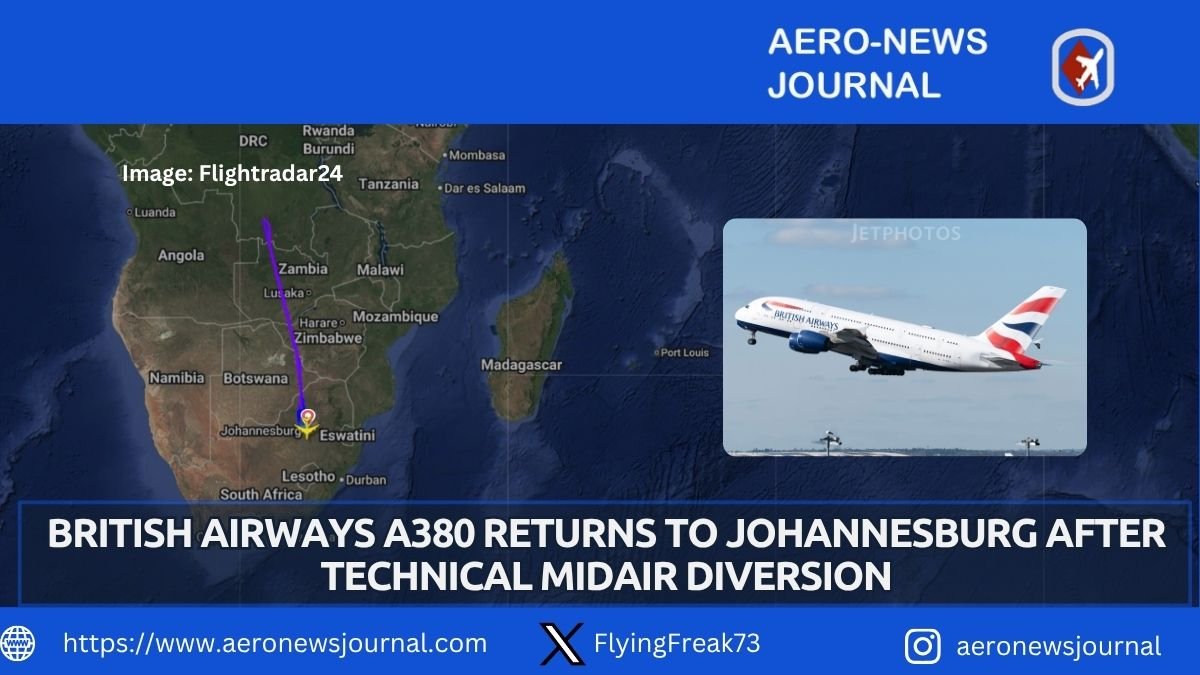
Passengers aboard a British Airways Airbus A380 bound for London experienced a significant flight disruption this weekend after their long-haul journey from Johannesburg was suddenly aborted. Flight BA54, operating with the massive G-XLEJ aircraft, departed O.R. Tambo International Airport following substantial ground delays. However, after traveling through Botswana and Zambia, the flight crew identified a technical malfunction regarding the aircraft’s critical weather radar system while cruising over the Democratic Republic of Congo. Faced with the inherent safety risks of navigating equatorial weather zones without reliable radar data, the pilots made the difficult decision to initiate a U-turn and return to South Africa.
The return journey presented its own logistical challenges for the crew and ground teams. Because the A380 was fully loaded with fuel for its intended transcontinental service to London Heathrow, the aircraft remained significantly above its maximum safe landing weight. To resolve this, the flight crew descended to a lower altitude and entered a prolonged holding pattern north of Johannesburg. The superjumbo circled for approximately two hours to burn off necessary fuel, ensuring a safe arrival back at the airport. This careful maneuver allowed the flight to land safely at O.R. Tambo seven hours after its initial departure.
The situation demonstrated the robust safety protocols governing modern aviation operations. Ground maintenance teams at O.R. Tambo immediately began inspections and successfully performed necessary repairs on the weather radar system. By ensuring the aircraft met all airworthiness standards, engineers quickly cleared the A380 for service, prioritizing both passenger safety and the efficiency of the airline’s recovery efforts. This diligent technical response ensured that the disruption remained contained to a single event without compromising the integrity of the aircraft’s systems for future long-haul operations on this busy international flight corridor.
Following the successful completion of all required maintenance checks, the same aircraft eventually departed Johannesburg late Saturday evening to complete its journey to London. This secondary departure occurred with minimal additional delay, allowing passengers to finally reach their destination. The incident serves as a stark reminder of the complexities involved in maintaining intercontinental flight schedules, where technical malfunctions can turn standard journeys into grueling seven-hour flights to nowhere. Despite the unexpected detour, the professional handling of the flight diversion ensured all passengers returned to the airport safely before successfully continuing their travels toward the United Kingdom on the rescheduled British Airways service.