

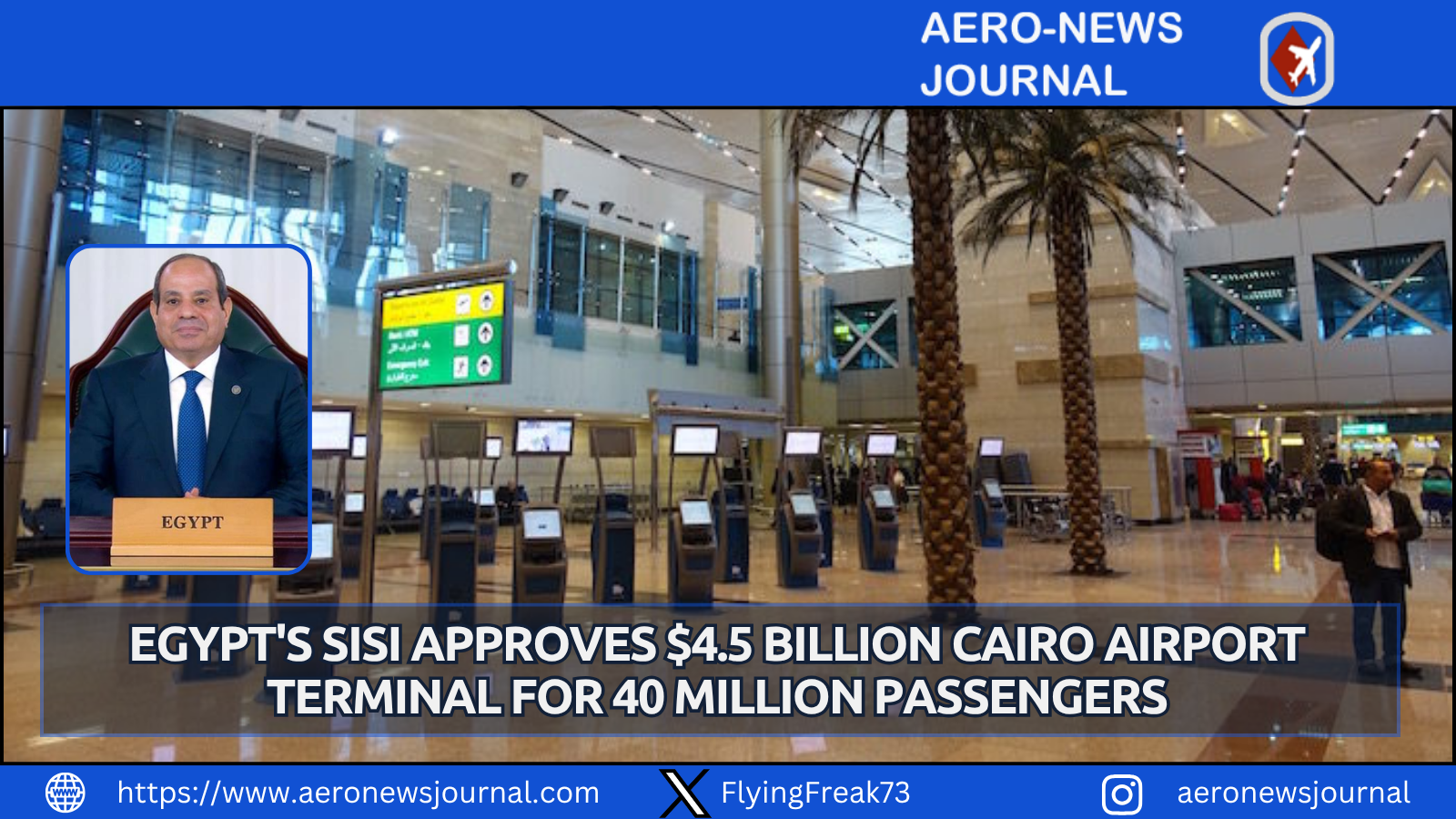
Cairo, Sept. 2 – President Abdel Fattah El-Sisi has directed the construction of a landmark new passenger terminal at Cairo International Airport, a USD 4.5 billion infrastructure project designed to accommodate 40 million passengers annually and elevate Egypt as a premier regional aviation hub linking Africa, Asia, and Europe. The Terminal 4 expansion, reviewed in high-level meetings with Prime Minister Mostafa Madbouly and Civil Aviation Minister Sameh El-Hefny, will apply the highest international standards in design, smart technology, sustainability, safety, and operational efficiency, positioning the facility as a global model for modern airport development and passenger experience.

Cairo International Airport currently handles more than 30 million travelers yearly through three existing terminals with combined capacity near 28 million, yet traffic is projected to keep rising with tourism growth and transit demand. The new terminal will nearly double overall airport throughput towards 70 million passengers, supporting national goals to attract 30 million tourists, boost foreign direct investment, and create integrated investment zones around Egyptian airports that invite private-sector operators and international airlines.

Financed through multiple financial institutions rather than solely state resources, construction is expected to last about four years, with phased operations possible after two and a half to three years. Advanced systems including artificial intelligence, biometric e-gates, digital processing, and environmentally sustainable operations will streamline flows, reduce congestion, and raise service quality while officials monitor passenger complaints to strengthen confidence in Egypt’s civil aviation network.
This strategic investment in Cairo International Airport Terminal 4 underscores Egypt’s Vision 2030 drive to modernize transport infrastructure, expand logistics capacity, and compete as a leading Middle East and Africa gateway. By combining world-class facilities with private participation and cutting-edge technology, the USD 4.5 billion project aims to accommodate surging passenger volumes, enhance regional connectivity, and deliver long-term economic returns through tourism, trade, and aviation excellence.