

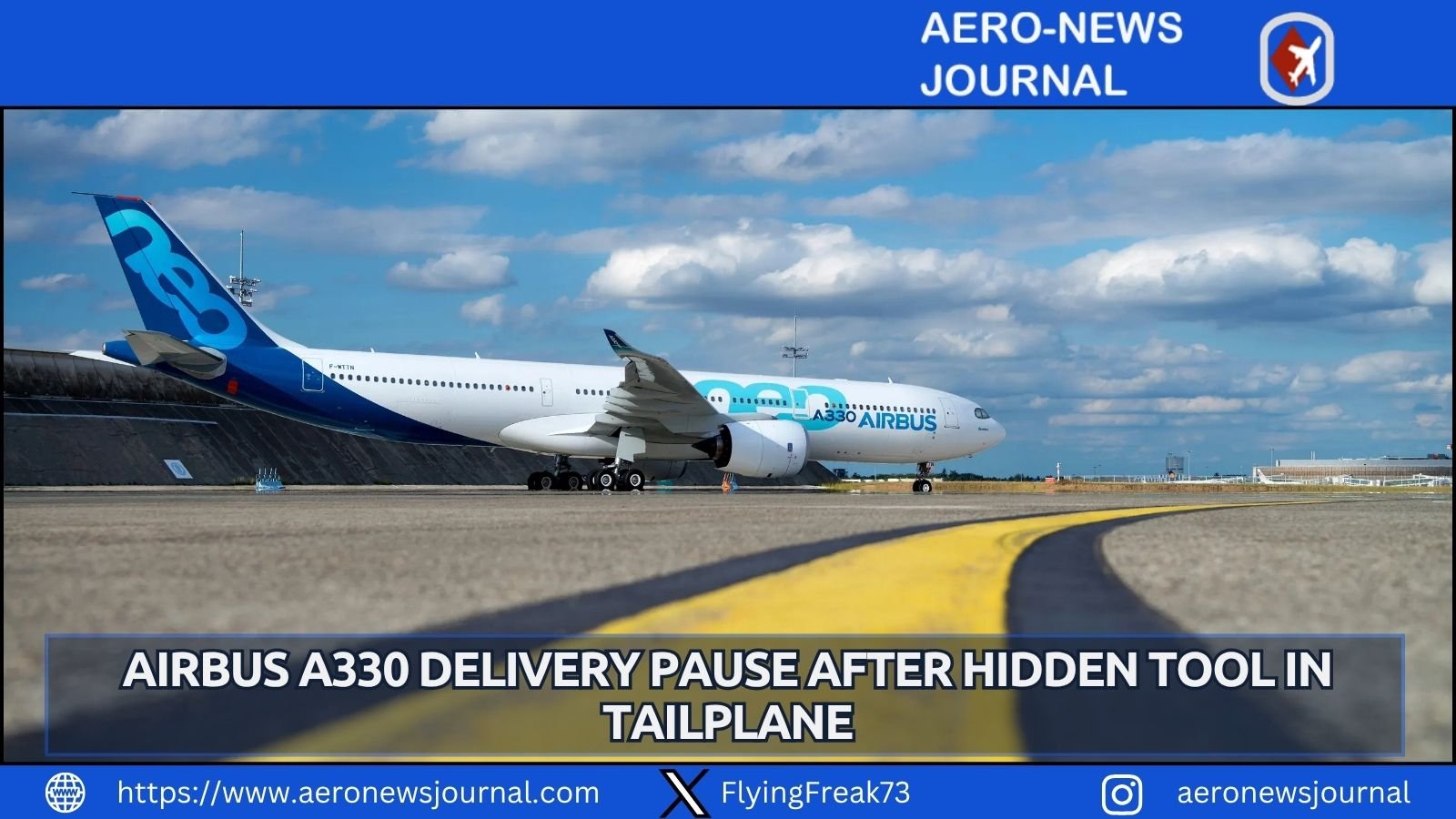
Paris, Sept. 4 – Airbus has delayed A330neo jet deliveries after a stray object was found inside an aircraft tail during production inspections, prompting extra quality checks across the assembly line. The isolated quality issue involved a tool left in the horizontal tail plane that controls pitch, discovered at a pre-delivery stage and leading to halted output in June and July. Manufacturers now emphasize foreign object damage prevention through rigorous tracking of tools and parts to protect aviation safety and airline schedules. Production of the A330 tail components occurs at Spanish facilities, though the exact location of the incident remains unspecified by the company.
The European planemaker confirmed the root cause has been identified, allowing A330 deliveries to resume after summer slowdowns that resulted in zero aircraft handed over during those two months. Data expected next week will likely show only one A330 delivered in August among 57 total jets, underscoring the impact on widebody aircraft supply. Industry campaigns against leftover tools or rags continue because such debris can threaten flight operations if missed during assembly or maintenance. Advanced RFID tagging of equipment is increasingly adopted to reduce these risks in modern aircraft production.
This quality lapse is unrelated to recent labor actions at Spanish plants and was first noted during routine checks rather than in-service flights. Airbus issued a statement acknowledging the isolated problem on an A330 horizontal tail plane and the subsequent inspections that slowed monthly deliveries. Foreign object damage remains a recognized hazard across aerospace manufacturing, with regulators stressing the need for complete accountability of all items used on the factory floor. The discovery reinforces why manufacturers invest in connected technology to monitor tools throughout the build process.
Resumed A330neo deliveries now proceed under tightened protocols to restore full production rates for airlines awaiting these long-range jets. The incident illustrates persistent challenges in maintaining zero-defect standards amid complex global supply chains for commercial aircraft. Aviation safety authorities continue highlighting foreign object risks as a priority for both new-build and in-service fleets. Airbus aims to meet remaining 2026 delivery targets after addressing this specific quality flaw in A330 assembly.