

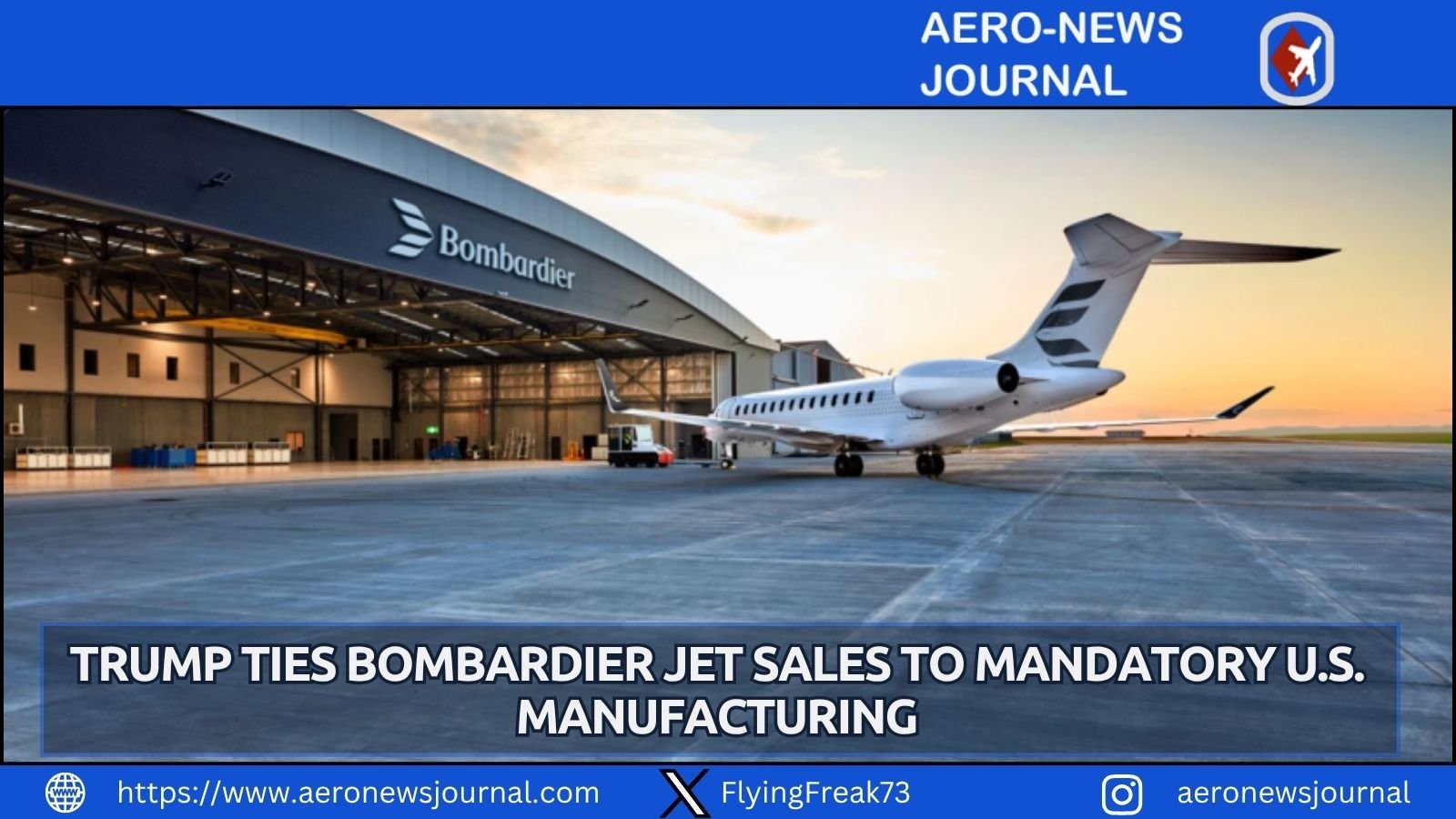
Washington, DC, Sept. 8 – U.S. President Donald Trump issued a firm ultimatum to Canadian aerospace manufacturer Bombardier, requiring the company to build planes in the United States or lose access to the American market for airlines and private buyers. The administration declared that foreign aerospace companies can no longer supply commercial and business aviation sectors without contributing to the domestic manufacturing base through U.S. production facilities. Montreal-based Bombardier produces flagship Global and Challenger business jets along with regional jets used by many U.S. carriers on short-haul routes across North America. Officials argued the firm has treated the lucrative American market as a revenue source while keeping high-skilled manufacturing jobs in Canada.
A total ban or steep import tariff on Canadian-built aircraft could disrupt fleet expansion plans for several U.S. regional carriers and private aviation operators that rely on Bombardier equipment. The threat represents a significant escalation in cross-border industrial friction amid broader tariff disputes and disagreements over industrial subsidies between Washington and Ottawa. Similar tensions previously arose in 2017 over the CSeries jetliner program, which later led Airbus to take a controlling stake and assemble aircraft at a plant in Mobile, Alabama. Shares of Canadian aerospace firms showed fluctuations after the announcement as markets assessed potential supply-chain impacts.
Bombardier has not yet issued an official response on whether it will consider expanding its industrial footprint inside the United States to retain market access. The demand aligns with a policy stance that foreign manufacturers must locate high-value production on American soil if they wish to continue selling to U.S. customers. Regional jet operations under capacity-purchase agreements form a major part of short-haul networks, making any restriction especially sensitive for domestic operators. Analysts note that relocating assembly lines would require substantial investment but could preserve long-term sales in the world’s largest aviation market.
The ultimatum underscores Washington’s determination to reshape aerospace supply chains and protect American manufacturing jobs through targeted trade measures. Continued access to U.S. airlines and business-jet buyers now hinges on Bombardier’s willingness to establish production facilities on U.S. territory. Failure to comply risks losing a critical export destination and forcing carriers to seek alternative aircraft sources. The development highlights ongoing efforts to prioritize domestic industrial capacity within the highly competitive global aviation sector.