

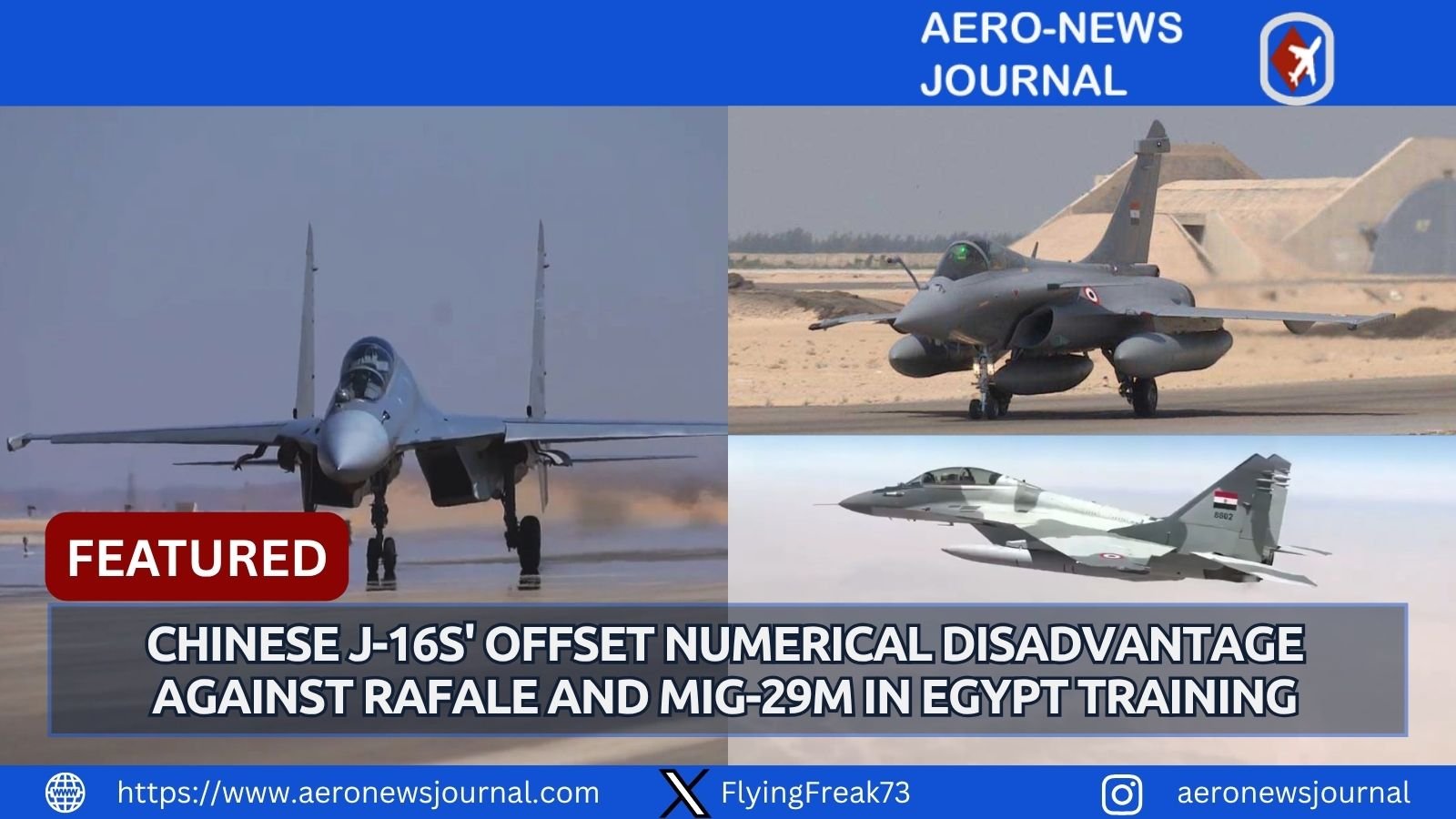
Chinese J-16 Fighters Overcome Numerical Odds Against Rafale and MiG-29M in Beyond-Visual-Range Training
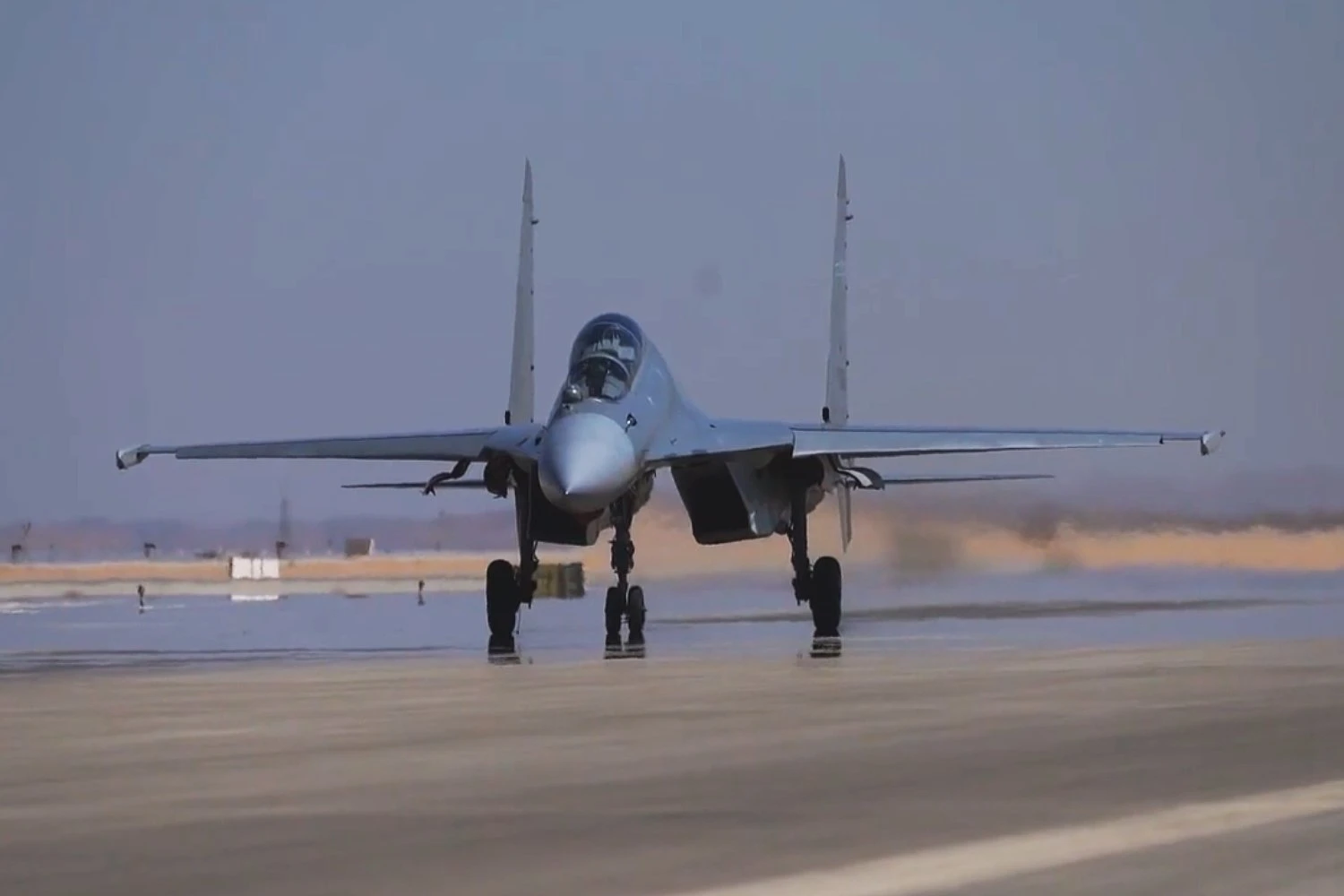
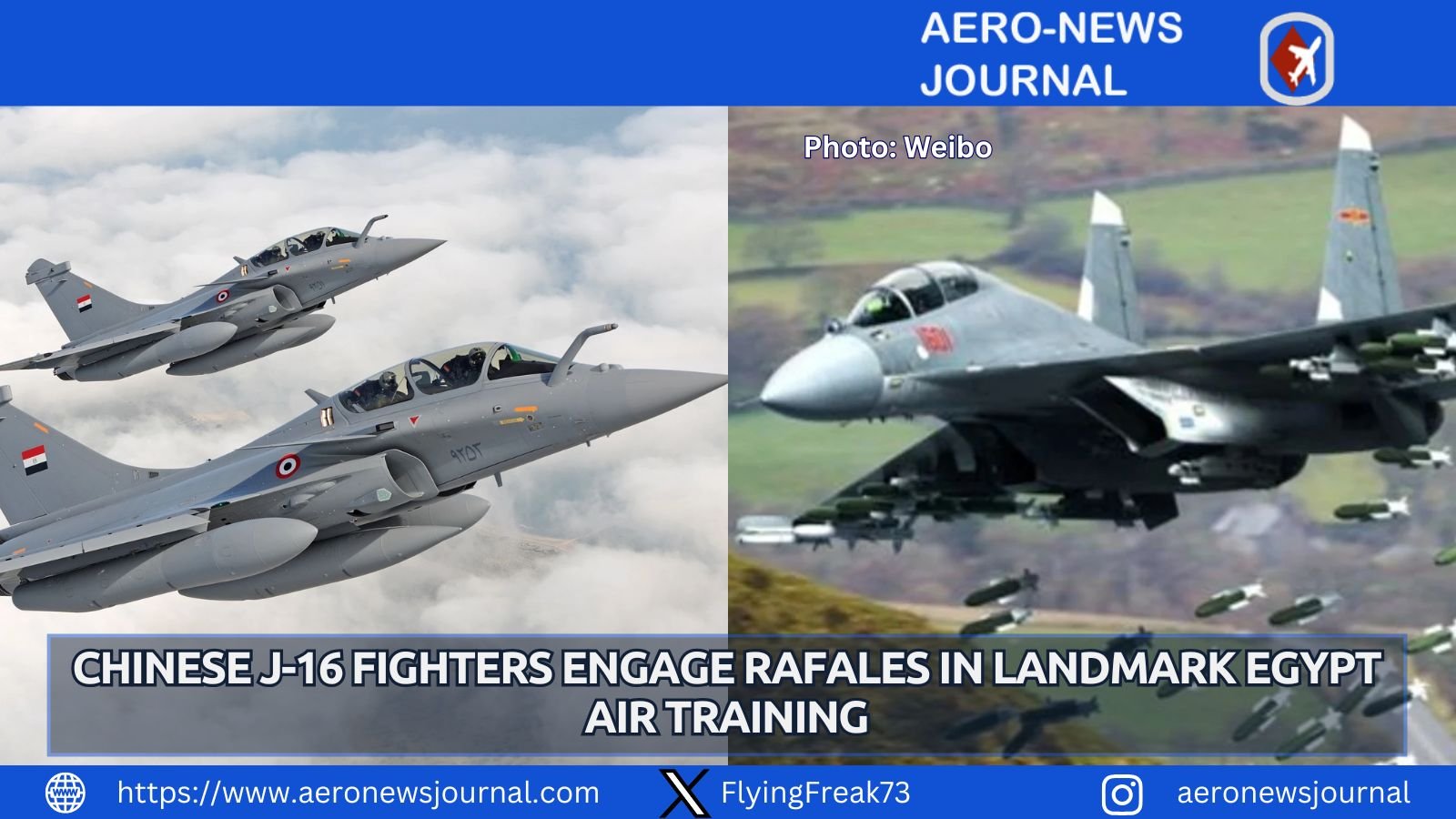
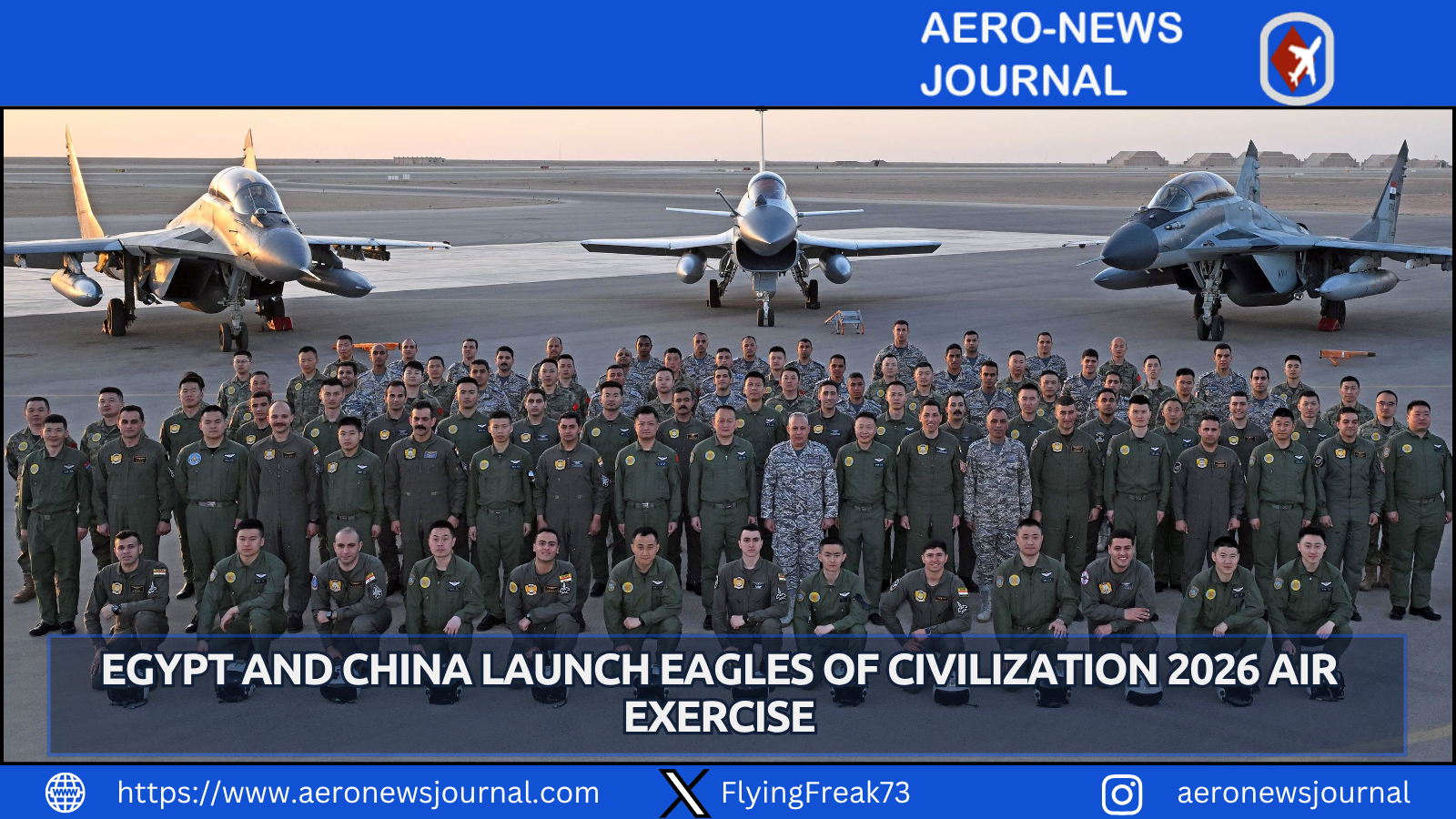
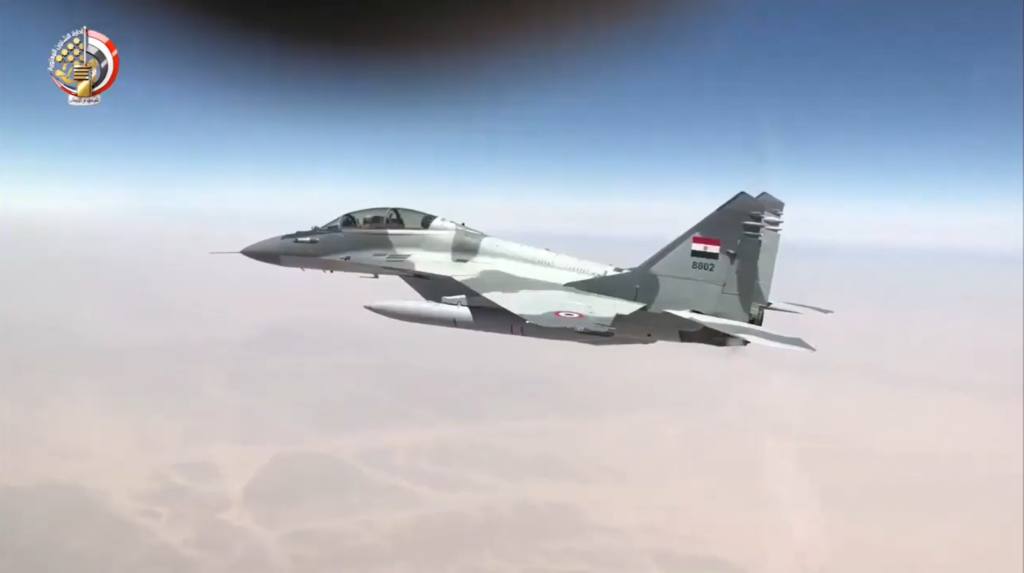
During the Eagles of Civilization 2026 joint air combat exercise conducted in Egypt from mid-August to early September, Chinese People’s Liberation Army Air Force J-16 multirole fighters participated in simulated beyond-visual-range engagements against Egyptian Air Force aircraft. On the third day of flight operations, four Chinese J-16s faced a numerically superior force of six Egyptian fighters comprising two French-supplied Rafale jets and four Russian-supplied MiG-29M aircraft, creating a three-to-two disadvantage. Chinese state media footage broadcast on October 11 illustrated the integration of support assets, including the KJ-500 airborne early warning and control platform, electronic warfare measures, and aerial refueling to sustain coordinated operations. This air combat training emphasized sensor coverage, data sharing, and precise weapons employment over close-range agility, allowing both air forces to assess capabilities under realistic simulated conditions that mirrored potential modern aerial warfare scenarios involving advanced multirole platforms.
KJ-500 Airborne Early Warning Enables Coordinated J-16 Response to Outnumbered Scenario

The Chinese contingent countered the numerical disadvantage by deploying the KJ-500 airborne early warning and control aircraft, which delivered wide-area surveillance, target identification, and real-time command coordination to the J-16 formation. Acting as an airborne battle management node, the KJ-500 shared a fused tactical picture that reduced reliance on individual fighter sensors and facilitated synchronized movements and missile employment. Chinese pilot Wei Yuexin described the mindset during the engagement, noting that crews concentrated exclusively on missile evasion timelines and tactical coordination while setting aside awareness of the opposing aircraft types or the numerical gap. This approach leveraged the J-16’s existing situational awareness advantages, enabling the formation to offset the three-to-two disparity through disciplined execution in the beyond-visual-range phase of the exercise against the Rafale and MiG-29M platforms.
Electronic Warfare and Mutual Exchanges Highlight Tactical Lessons from the Exercise
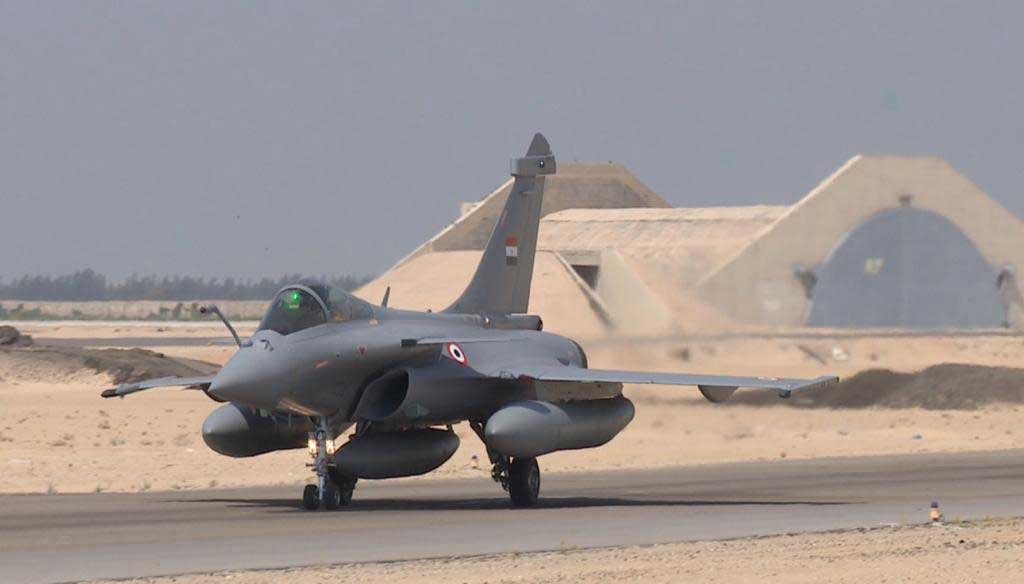
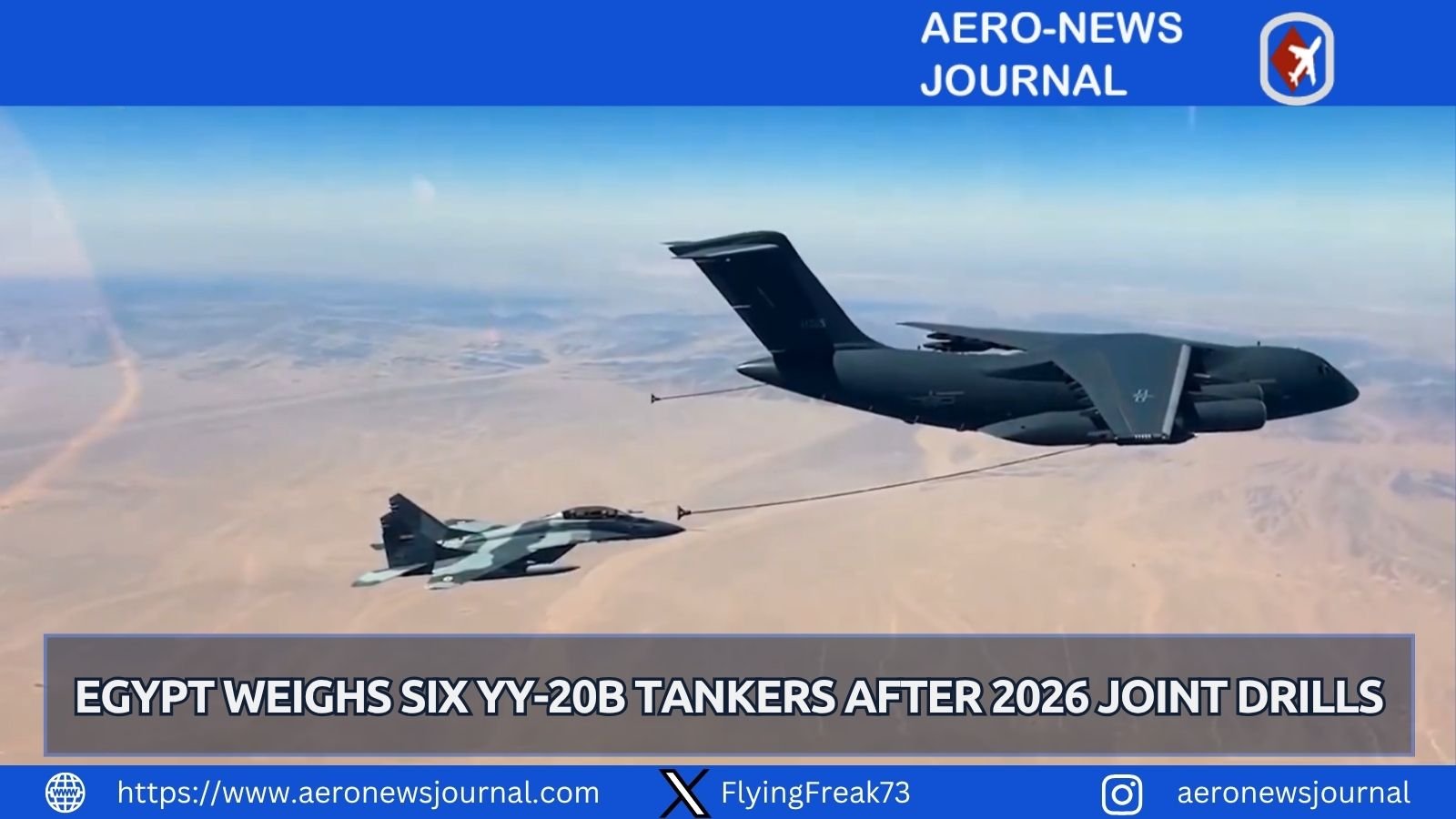
Electronic warfare emerged as a notable element, with Egyptian pilots expressing particular interest in the timing and effectiveness of Chinese electronic jamming techniques observed during the simulated combat. Following the day’s training, discussions continued late into the evening at the airfield, enabling detailed exchanges on tactics and aircraft performance between the two forces. Wei Yuexin observed that Egyptian aircraft demonstrated strong close-combat maneuverability, a characteristic long associated with the MiG-29M due to its high thrust-to-weight ratio. In contrast, the J-16 retains significant visual-range advantages through integration of the PL-10 air-to-air missile for high off-boresight targeting. The exercise also incorporated aerial refueling to support extended operations, reinforcing the value of integrated systems in sustaining effectiveness during outnumbered beyond-visual-range engagements.
Insights from J-16 Versus Rafale and MiG-29M Training Reflect Evolving Air Combat Priorities
Egyptian personnel reportedly praised both the J-16 fighters and the PL-15 long-range air-to-air missile, indicating recognition of Chinese technological progress in multirole aviation. To address disparities in sensor and missile capabilities, the training included visual-range scenarios relying on simulated gun kills rather than missiles, aligning with broader international practices of scripting engagements to balance technological differences. Overall, the Eagles of Civilization 2026 exercise illustrated how the combination of KJ-500 airborne early warning, electronic warfare, and coordinated tactics allowed Chinese J-16 pilots to manage a numerical disadvantage against Rafale and MiG-29M aircraft in beyond-visual-range conditions. The collaboration provided both air forces with practical insights into modern air combat dynamics, where networked sensors and precise timing often determine outcomes more than raw numbers or pure maneuverability alone.