

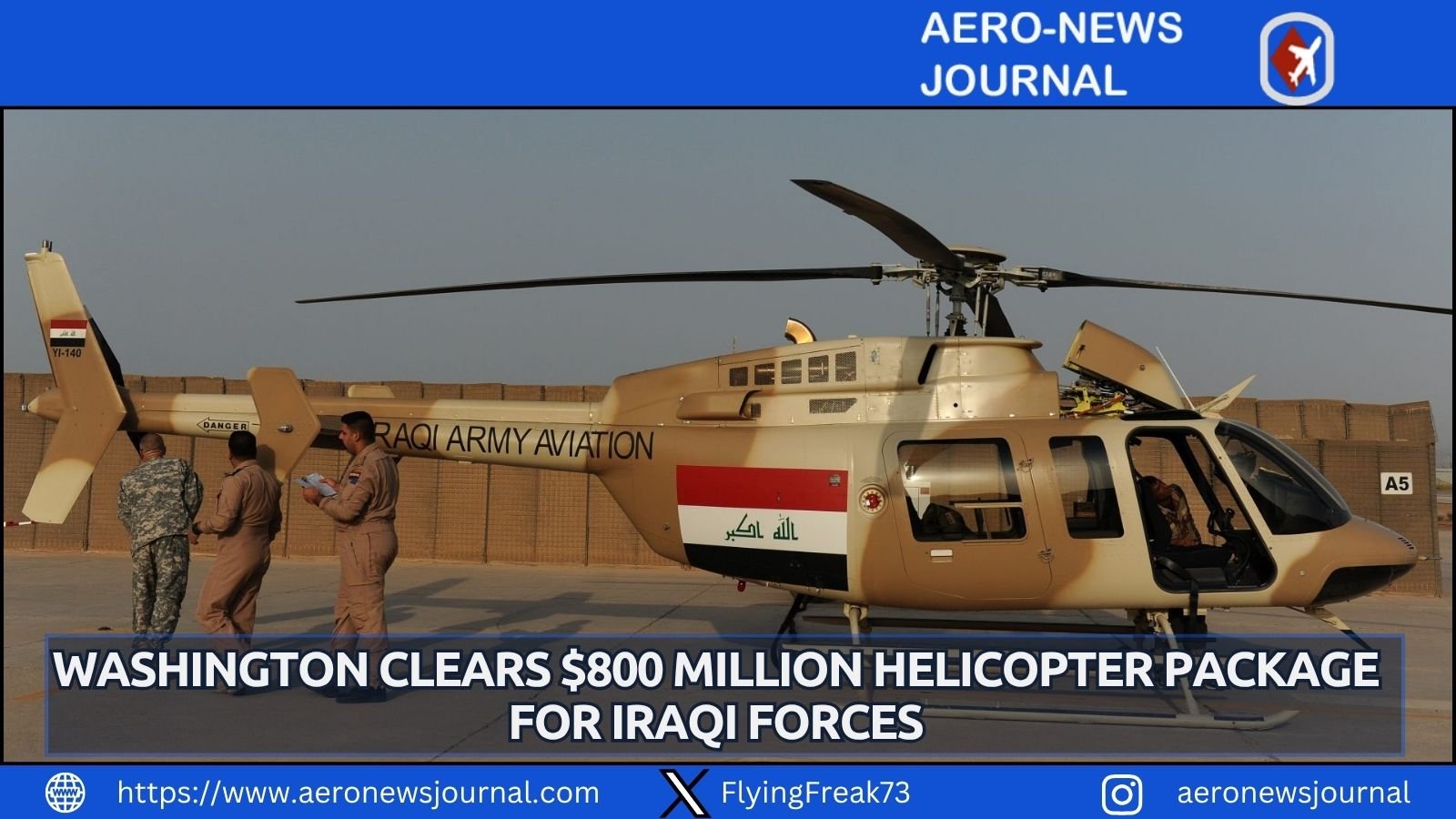
Washington, DC, Sept. 1 – The United States has approved a possible Foreign Military Sale of military helicopters and related support to Iraq valued at an estimated eight hundred million dollars, according to standard Defense Security Cooperation Agency notification practice for major arms transfers. The proposed package is intended to strengthen Iraqi Security Forces aviation, improve border and infrastructure protection, and support counterterrorism and homeland defense missions through rotary-wing aircraft, sensors, weapons integration, spare parts, training, and contracted logistics. Congressional certification is required under the Arms Export Control Act before a letter of offer and acceptance can proceed to a final contract.
This United States military sale to Iraq of helicopters forms part of long-running defense cooperation designed to modernize Army Aviation Command fleets after combat losses and aging airframes. Armed light-attack and medium-lift platforms, night-vision compatible systems, secure communications, electro-optical sensors, and precision rocket capability would increase operational readiness without altering the basic military balance in the region. Iraq already operates comparable Bell-series helicopters and is assessed as able to absorb additional aircraft and sustainment services.
The estimated eight hundred million dollar ceiling typically covers aircraft, engines, armament kits, countermeasures, mission management systems, operator and maintainer training, technical documentation, and multiyear contractor field support. Principal industry partners in such Foreign Military Sales cases have included United States helicopter manufacturers and support contractors that deliver integrated packages rather than airframes alone. Implementation would depend on Iraqi national or Foreign Military Financing funds and subsequent contracting.
Officials describe the approval as consistent with United States foreign policy and national security goals of helping a strategic partner defend critical energy infrastructure, civilian populations, and sovereign territory. The announcement does not itself complete the sale; it authorizes further negotiation of quantities, delivery schedules, and logistics support so Iraq can field a more capable rotary-wing force for current and future contingency operations.