

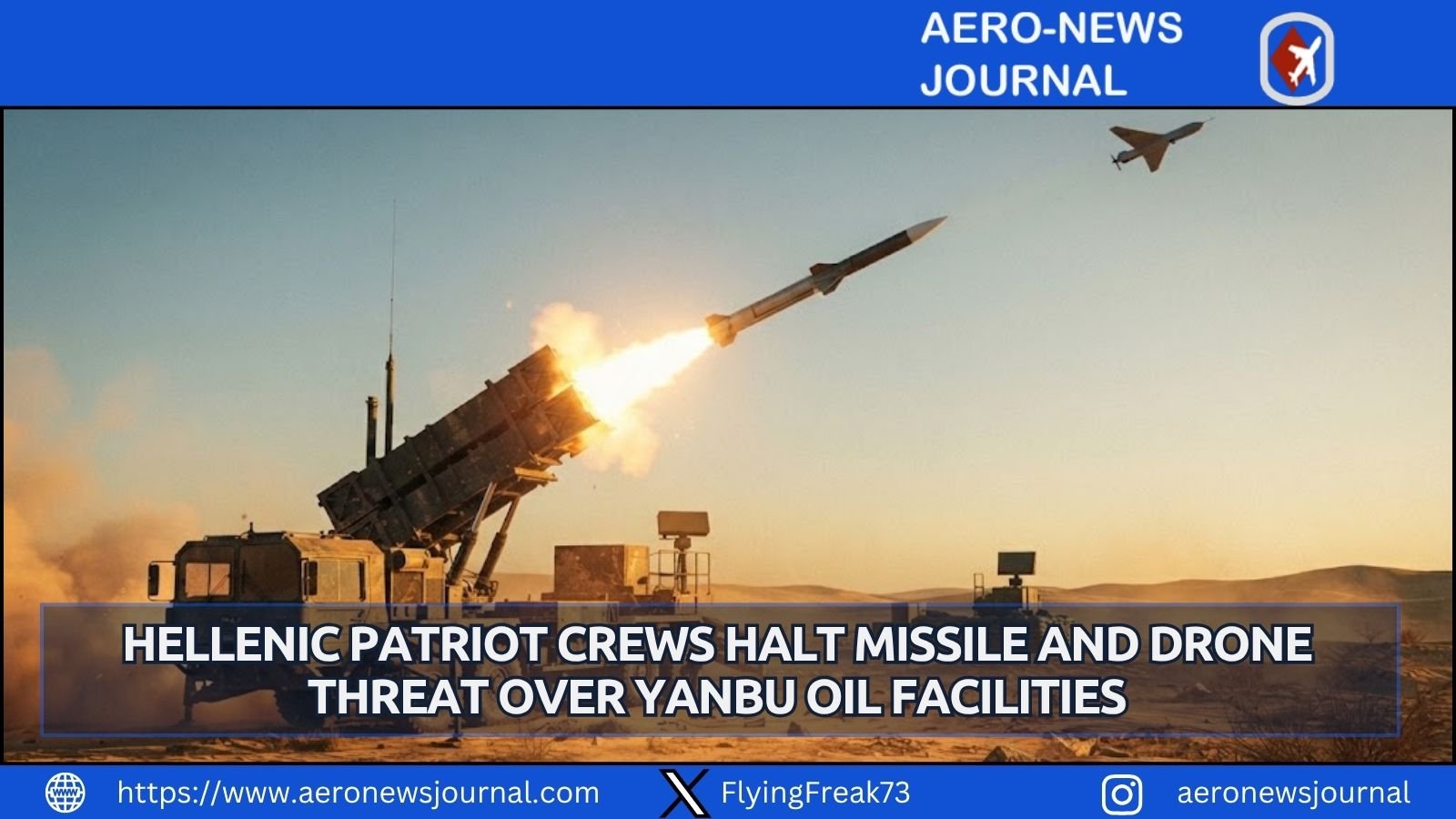
Athens, Sept. 25 – A Greek-operated air defence system intercepted a ballistic missile and a drone over Saudi Arabia on Thursday in the wider Yanbu region, home to major oil refining facilities that form a cornerstone of Gulf energy infrastructure. Greek military personnel manning the US-made Patriot air defence battery confirmed both incoming threats were shot down after the system launched two interceptor missiles, according to security sources. Saudi civil defence had earlier issued alerts covering Mecca, Tabuk, Jeddah, Yanbu and Taif amid the unfolding incident. This marked the fifth combat use of the Greek Patriot system since the conflict involving Iran intensified earlier this year.
The deployment of the Greek-operated Patriot air defence system in Saudi Arabia dates to 2021 under a bilateral agreement aimed at safeguarding the kingdom’s critical energy facilities from aerial threats including ballistic missiles and drones. Greek forces continue to operate the battery independently while coordinating with host-nation authorities to maintain readiness across key industrial zones. The successful intercepts in Yanbu underscore the system’s operational effectiveness against mixed threat profiles that combine high-speed ballistic missiles with slower unmanned aerial vehicles.

No official details were released regarding the origin of the ballistic missile or the drone that approached the Yanbu area. The Greek Patriot battery’s rapid response prevented any reported damage to oil infrastructure or nearby population centres. The continued presence of the Greek-operated air defence system highlights Europe’s expanding contribution to regional security arrangements focused on protecting strategic energy assets.

Ongoing operations of the Greek military Patriot battery in Saudi Arabia remain a key element of layered air defence covering Red Sea coastal facilities and inland industrial sites. The latest intercepts reinforce the value of proven surface-to-air capabilities in an environment of persistent missile and drone activity. Reliable performance of the Greek-operated system continues to support the stability of vital energy corridors.