

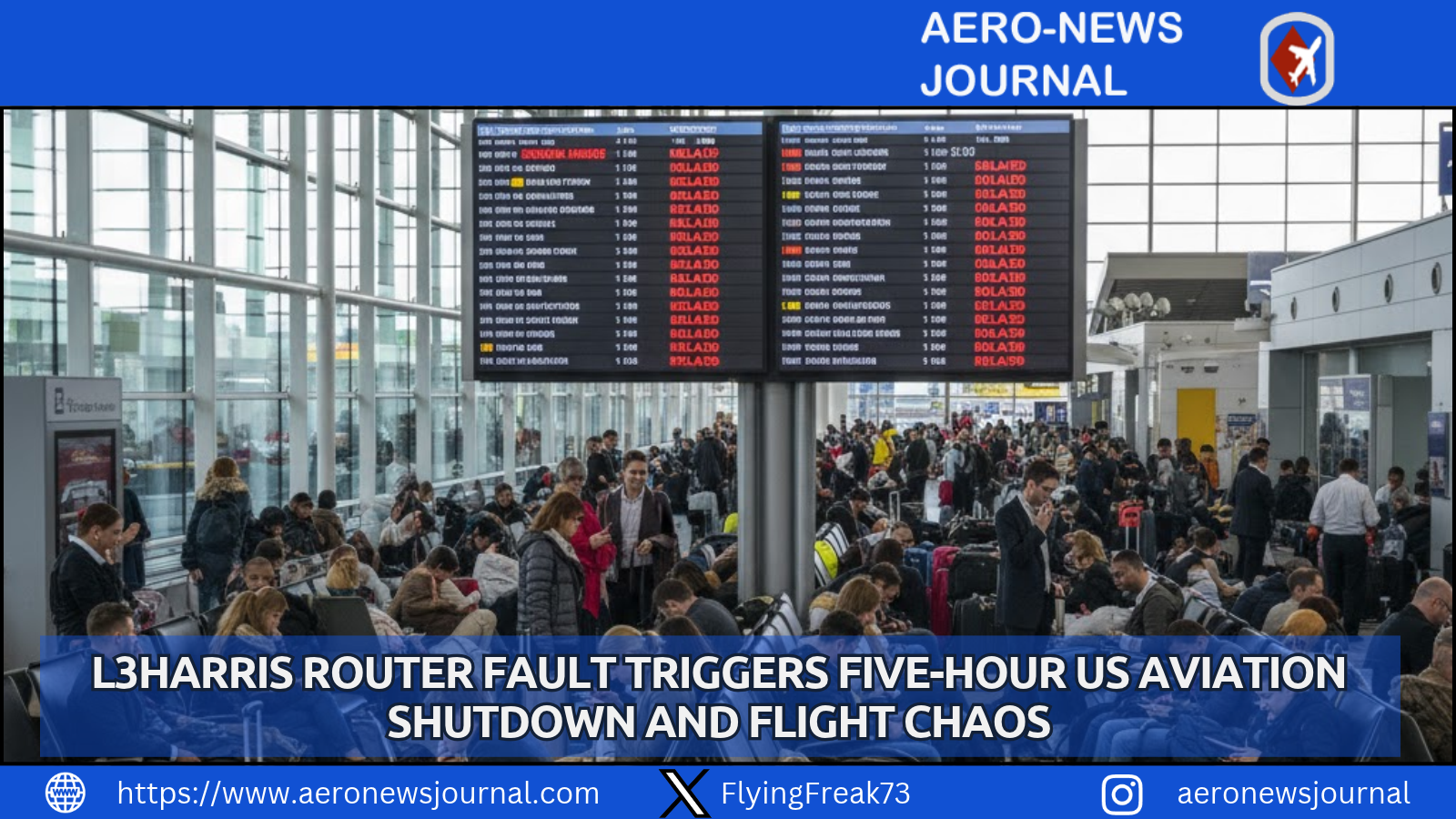
Washington, DC, Nov. 15 – A federal aviation network outage lasting almost five hours halted departures across the United States and affected more than 20,000 flights. Officials traced the disruption to a router installed by contractor L3Harris during routine telecommunications work. The FAA imposed a nationwide ground stop once air traffic control voice links and radar data feeds became unreliable at multiple facilities. Transportation Secretary Sean Duffy described the episode as a case where the existing system failed to perform under operational pressure.
‘This was an FAA system that didn’t meet the moment,” Transportation Secretary Sean Duffy said, underscoring the network’s failure during the outage.
Maintenance crews were replacing aging copper lines with fiber-optic cable at one or more remote sites when the newly fitted routers began generating excessive traffic. Each device issued more than one thousand connection requests every four to five seconds, overwhelming neighboring equipment. The resulting congestion interrupted communications with aircraft and radar displays, prompting controllers to stop all departures. Investigators are still determining whether the fault originated in installation practice, configuration choices, or defective hardware supplied by L3Harris.
L3Harris stated that it is cooperating with the FAA review of the November 13 event and noted that more than seventy percent of the planned copper-to-fiber conversion across the airspace network is already finished. Agency leaders cautioned that similar interruptions remain possible until the remaining legacy segments receive full replacement. Duffy indicated that accountability measures will be applied to the long-term contractor responsible for the communications backbone. Reviewers found no indication of external intrusion or cyber activity.
The episode underscores persistent exposure within the contractor-operated air traffic control infrastructure. While the fiber upgrade is intended to improve resilience, the recent router incident demonstrated residual risks during the transition. Resolving the specific L3Harris equipment issue will be necessary to reduce further cancellations and delays. Broader modernization of the national system is required to lower the chance of comparable aviation shutdowns in the future.