

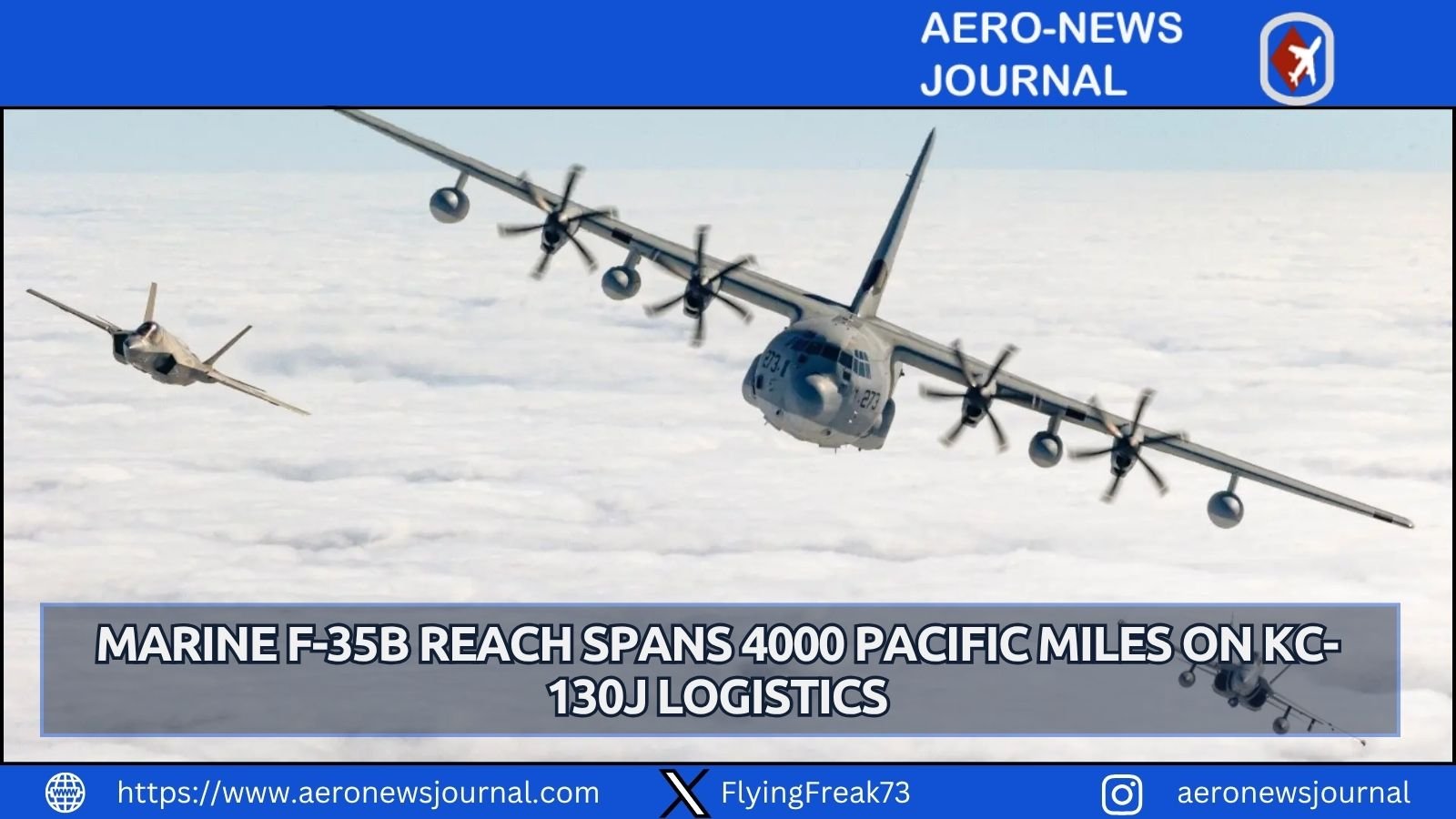
Washington, DC, Sept. 25 – The United States Marine Corps extended F-35B Lightning II combat reach across a 4,000-mile Pacific transit using KC-130J Super Hercules aircraft in Operation Slingshot. The 3rd Marine Aircraft Wing conducted an island-hopping demonstration from Royal Australian Air Force Base Tindal through Cairns, Pohnpei, Kwajalein Atoll, and Wake Island to Hawaii. MV-22B Ospreys helped secure remote sites supporting F-35B operations throughout the Indo-Pacific.
KC-130Js flew ahead as self-contained logistics hubs transporting Marines, maintenance equipment, fuel, and supplies to austere airfields. Marines set up aviation-delivered ground refueling and rearming points at undeveloped locations. This approach extends F-35B range and lethality while minimizing dependence on strategic tankers and fixed bases across the Pacific.
Crews performed long-range overwater navigation and landed the 135,000-pound KC-130J on austere airstrips. Loadmasters handled weight balance and supported ground refueling for forward operations. Distinct roles allowed F-35Bs to fight from expeditionary sites while KC-130Js supplied fuel, personnel, and maintenance, and MV-22Bs moved teams to prepare locations.
Operation Slingshot modernized island-hopping, drawing on C-130 history at Khe Sanh and Desert Storm. The KC-130J distributes support over long distances to sustain F-35B fighters in the Indo-Pacific. The exercise confirmed Marine aviation can project power across a 4,000-mile Pacific transit with organic assets.