

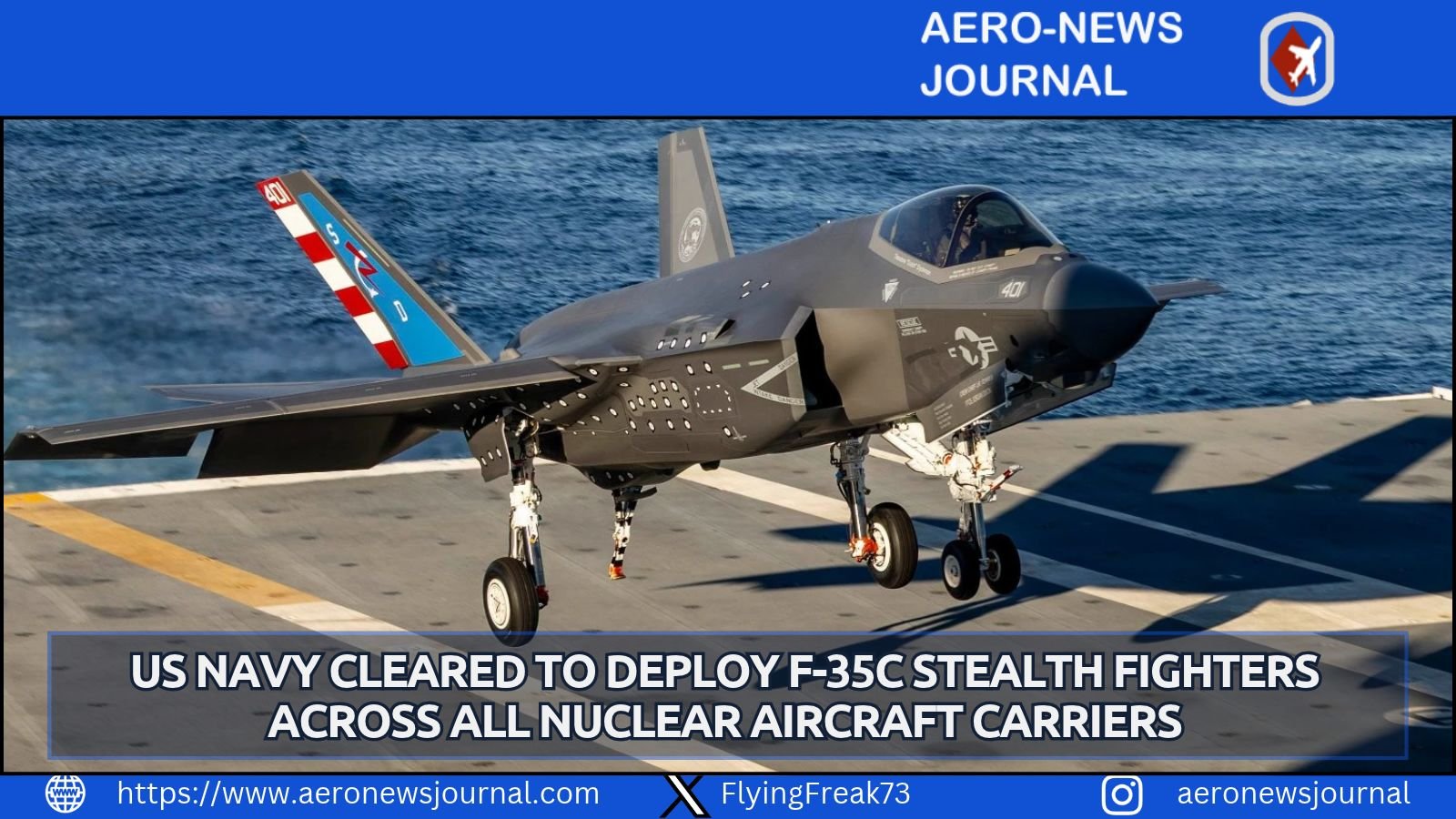
Maryland, Nov. 23 – The U.S. Navy has officially authorized F-35C Lightning II stealth fighter operations across its entire nuclear-powered aircraft carrier fleet, expanding deployment options for fifth-generation naval aviation. This milestone follows successful compatibility trials and embarked testing aboard the Gerald R. Ford-class carrier USS John F. Kennedy (CVN-79), marking a critical step toward its upcoming service entry.
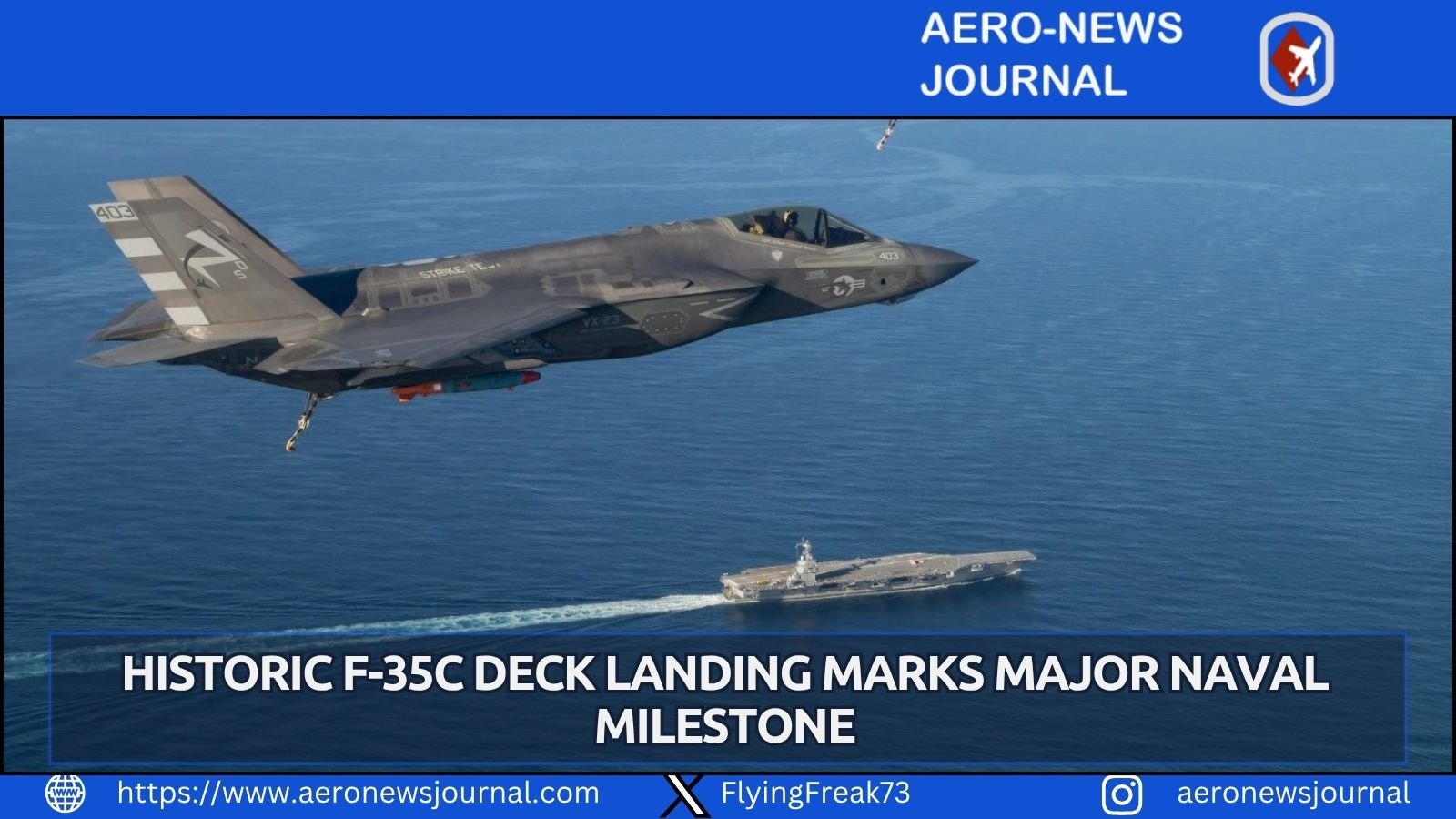
Evaluations aboard the future USS John F. Kennedy spanned eleven days utilizing two F-35Cs from Naval Air Station Patuxent River, Maryland. The test campaign encompassed 34 flights, 122 catapult launches, and 122 arrested landings. These embarked trials validated structural models, launch and recovery loads, and initial Block 4 software performance in a demanding maritime environment.
“This is a pivotal event for the F-35C, the Kennedy, and the United States Navy,” said Sean Jackson, Lockheed Martin’s vice president of the F-35 Development Program. “For the first time, the aircraft demonstrated launch and recovery operations from a Gerald R. Ford-class flight deck, advancing the integration of fifth-generation combat capabilities with the world’s most advanced aircraft carrier technology.”
Previously restricted to Nimitz-class carriers, F-35C operations now gain broader fleet integration as USS Gerald R. Ford (CVN-78) undergoes maintenance and USS John F. Kennedy progresses toward its scheduled 2027 operational entry. Integrating stealth capabilities, advanced sensors, and networked data-sharing strengthens modern carrier strike group combat effectiveness.

Meanwhile, debate surrounds Gerald R. Ford-class electromagnetic launch systems, with President Donald Trump favoring a return to legacy steam catapults. Revising integrated shipboard architecture could disrupt construction timelines, even as the Navy advances F-35C carrier readiness.

