

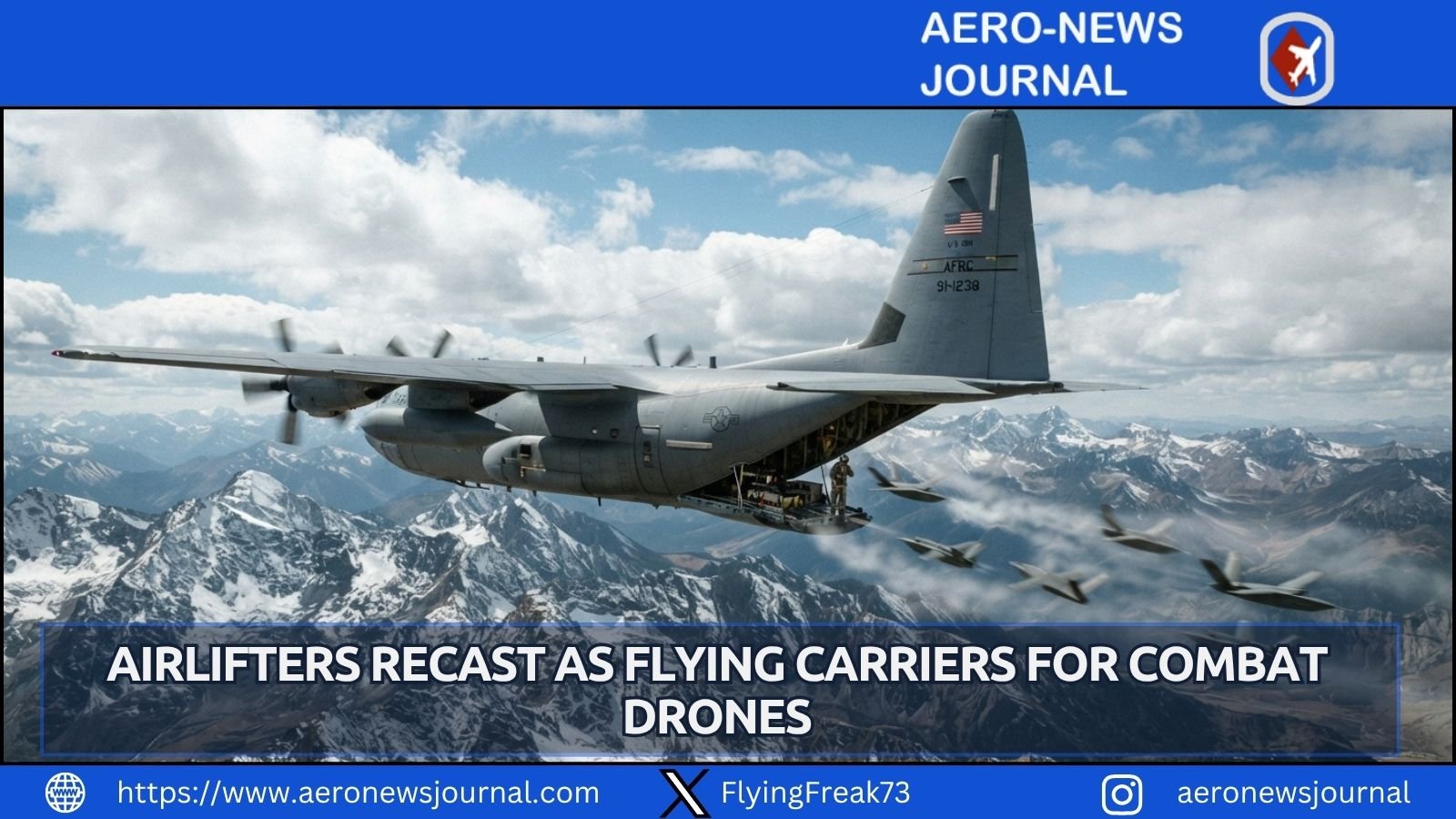
Washington, DC, Sept. 15 – The US military is exploring converting cargo planes into drone launch platforms as Air Force planners seek adaptive motherships that can rapidly deploy unmanned swarms for base defense and intelligence. Transport aircraft such as the C-130 Hercules and C-17 Globemaster III already move troops and supplies worldwide; officials now want those same airlifters to serve as flying aircraft carriers that release small UAVs at operational altitude without major airframe changes. A recent Small Business Innovation Research solicitation describes cargo planes as force-multiplying launch platforms that could deliver a rapidly deployable swarm for base security while also acting as high-altitude drone motherships, echoing earlier Gremlins recovery tests from a C-130. Keyword-rich concepts such as cargo plane drone mothership, C-17 UAV launch system, and Air Force transport aircraft drone swarm sit at the center of this effort to multiply combat power from existing fleets.
Prototype work already points the way. Common launch tubes fitted to tanker hatches and cargo ramps have shown that small drones can leave a KC-135 or special-operations C-130 in flight to provide extra sensors or a last-ditch defensive screen. Palletized systems proven under Rapid Dragon further demonstrate that standard airdrop procedures can send munitions or recoverable UAVs out the back of unmodified C-17s and C-130s, turning logistics aircraft into stand-off launchers. Industry teams are now being asked to prove coordinated artificial-intelligence control of multiple uncrewed systems released from Mobility Air Forces aircraft so that a single cargo plane can seed a defensive or reconnaissance grid over a forward airfield.
Operational payoff would be significant in a high-end fight. A converted cargo plane could orbit outside the most lethal threat rings, dispatch cheap attritable drones to hunt incoming missiles, jam radars, or map enemy positions, then recover or expend them as needed. The same platform could still haul cargo on the next sortie, giving commanders flexible options without waiting for dedicated fighter or bomber sorties. Survivability of tankers and airlifters themselves would improve if they could launch their own escort drones instead of relying solely on scarce fighters.
Challenges remain, including safe mid-air separation, reliable recovery or disposal of launched vehicles, and integration of swarm command links into busy cargo cockpits. Yet the direction is clear: the US military intends to squeeze extra combat value from every C-130 and C-17 already in the inventory. Converting cargo planes into drone launch platforms therefore represents a pragmatic, relatively low-cost path to massed unmanned effects that can be fielded faster than entirely new aircraft types.