

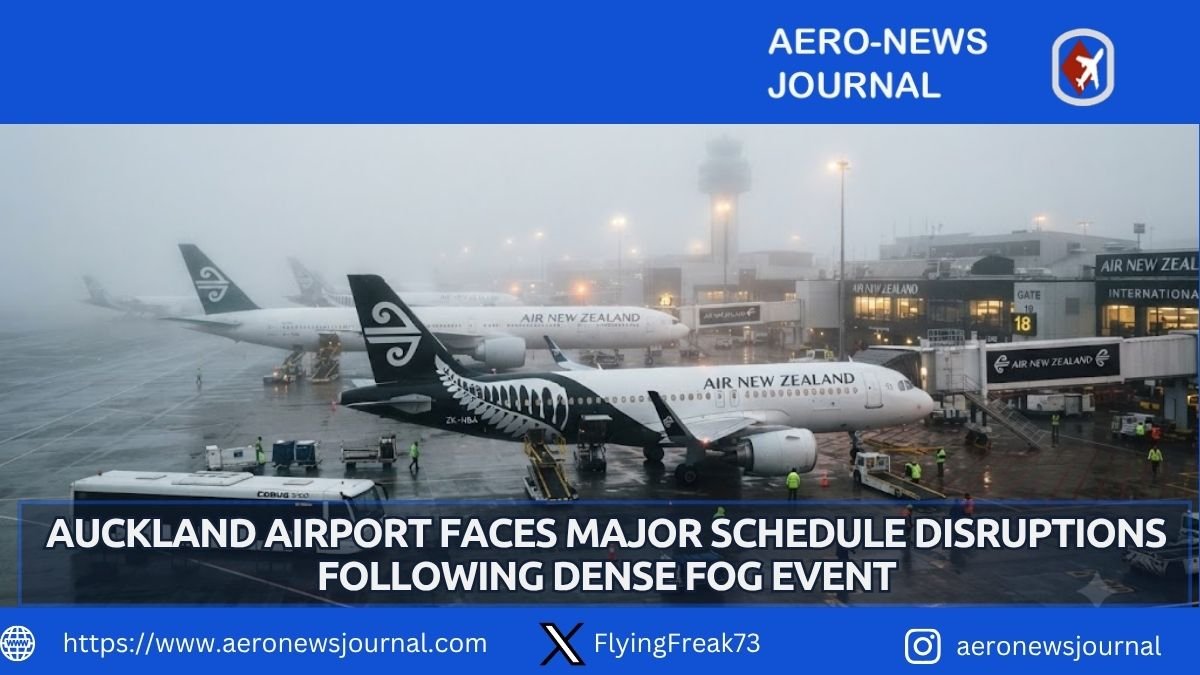
Auckland, Aug. 10th – Thick, persistent fog recently blanketed Auckland Airport, creating significant disruption for travelers and airline operations across the region. The challenging weather conditions forced aviation authorities to implement strict visibility restrictions, which directly impacted the airport’s tight flight schedule. Consequently, airport officials confirmed that nineteen flights were subjected to lengthy delays, while eight scheduled services were unfortunately cancelled, leaving many passengers stranded and needing to rebook their travel arrangements for later in the day.
The sudden arrival of low-lying cloud and dense fog highlighted the ongoing vulnerability of air travel to unpredictable New Zealand weather patterns. While major international routes and domestic jet services are often equipped with advanced navigation technology to handle limited visibility, these regional disruptions frequently affect smaller aircraft that lack similar automated landing capabilities. Airport management worked closely with ground crews and airline partners throughout the period to minimize the resulting backlog and restore normal operations as soon as conditions permitted safe movement on the tarmac.
As the visibility improved and the fog gradually lifted, airport staff prioritized clearing the accumulation of delayed flights to stabilize the departure and arrival boards. Travelers were advised to check their latest flight status through official airline websites or the airport’s dedicated portal before heading to the terminal to avoid further inconvenience. This incident serves as a stark reminder of the complexities involved in managing one of the busiest travel hubs in the country during adverse meteorological events that can impact local infrastructure.
Effective communication between the airport authorities and airlines remained the primary focus throughout the disruption to ensure that all affected individuals received timely information regarding their itineraries. Although the situation caused considerable frustration for those caught in the delay, the swift return to standard operations demonstrated the resilience of the airport’s logistics team. As regular schedules resumed by the late afternoon, passengers were reminded that safety remains the absolute priority in aviation, regardless of the inconvenience caused by nature’s unpredictable atmospheric shifts across the North Island.