

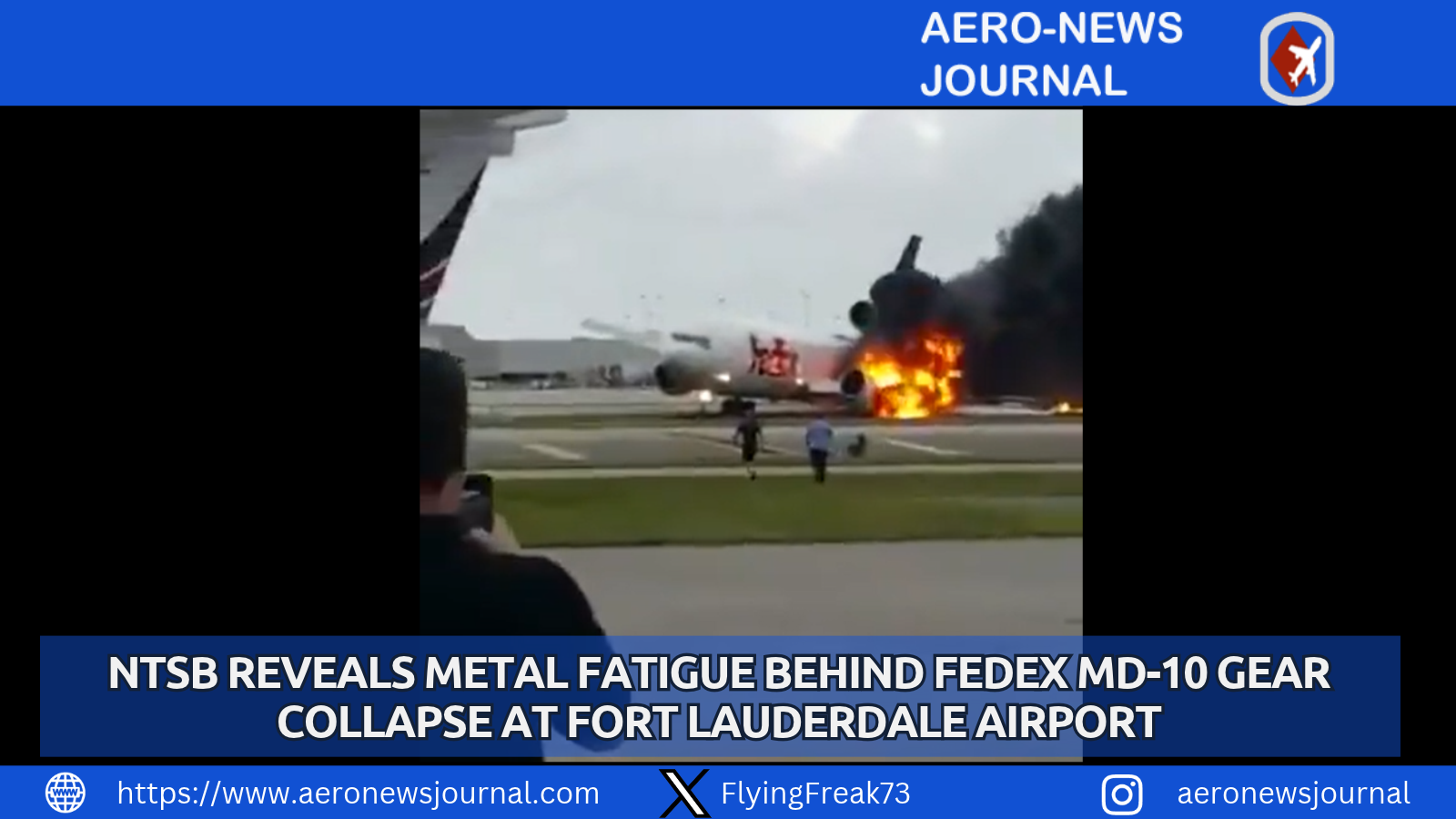
Washington, DC, October 29 – On October 28, 2016, FedEx Express Flight 910, a McDonnell Douglas MD-10-10F freighter, suffered a left main landing gear failure at Fort Lauderdale–Hollywood International Airport after departing from Memphis. During touchdown on runway 10L, the gear collapsed, causing the jet to veer left as the wing and engine scraped the surface and caught fire.
Airport fire crews extinguished the blaze swiftly, and both pilots evacuated safely through the right cockpit window using an escape rope without serious injury. The MD-10 aircraft stopped partially off the runway, sustaining substantial damage that resulted in a total loss, while temporary runway closures disrupted operations at the Fort Lauderdale facility.

The NTSB investigation determined that a metal fatigue crack in the landing gear cylinder initiated the collapse, progressing undetected until the failure occurred. Contributing factors included the missing protective cadmium coating and the operator’s failure to overhaul the gear at the manufacturer-recommended eight-year interval, producing this critical aviation event.
This FedEx Express Flight 910 MD-10 landing gear collapse highlights aviation safety priorities in preventing metal fatigue through rigorous maintenance protocols and thorough inspections for aging freighters. The NTSB findings continue to inform practices that reduce risks of similar gear failures in cargo operations worldwide.