

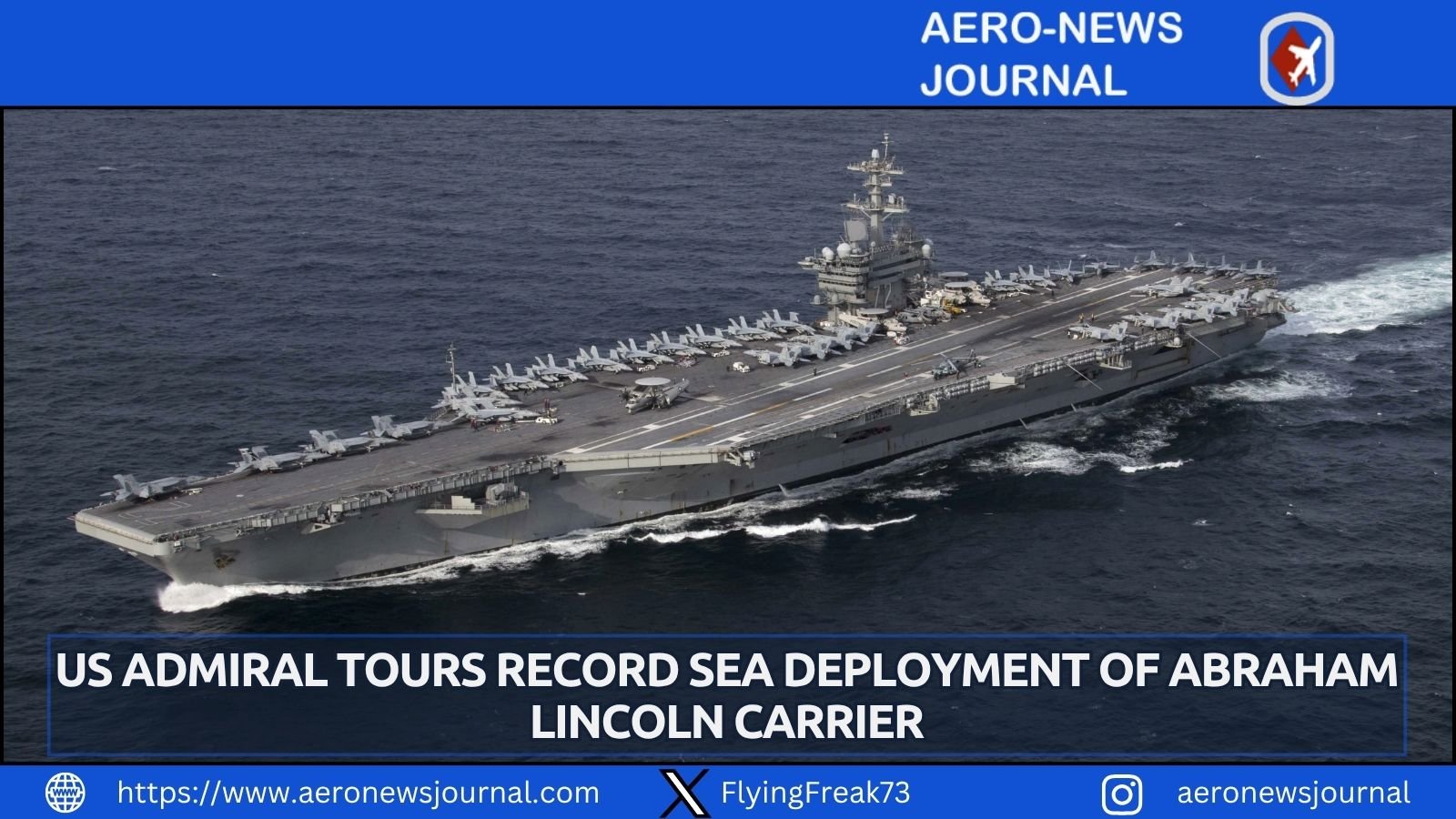
Washington, DC, Aug. 17 – Adm. Brad Cooper, the preeminent commander of United States military forces in the Middle East, recently conducted a high-profile visit to the USS Abraham Lincoln. Currently stationed in the Arabian Sea, this aircraft carrier has remained on an exceptionally long deployment that began in January, playing a critical role in the ongoing United States conflict against Iran. The vessel has been instrumental in enforcing a strategic blockade on Iranian ports, a core component of the broader American maritime operations in the region.
The visit comes amidst growing public and military scrutiny regarding the welfare of the service members aboard the carrier. Recent reports have highlighted significant concerns involving mental health, logistical supply shortages, and general infrastructure issues that have plagued the ship during its record-setting tenure at sea. Having spent over 240 days of uninterrupted time in the area, the crew and the massive vessel are under immense pressure, forcing military leadership to address these sustainability issues directly.
Adm. Cooper officially characterized the mission as one of the most operationally intense and historically consequential deployments in the modern era. During his extensive ten-day tour of the region, the CENTCOM leader traveled through several key nations—including Israel, Iraq, Jordan, Saudi Arabia, Bahrain, and the United Arab Emirates—to coordinate with senior civilian and military officials. This diplomatic circuit underscores the complexity of maintaining regional security amidst persistent tensions and active military engagements.
The extended presence of the Lincoln Strike Group, which carries thousands of sailors and Marines, highlights the grueling reality of prolonged naval deployments. As these forces continue to project American military strength and readiness, the persistent challenges aboard the ship serve as a sobering reminder of the human and operational costs associated with maintaining such an expansive presence in the Middle East. Military planners continue to monitor the situation closely to determine the long-term impacts on personnel readiness and fleet maintenance.