


Kyiv, Aug. 26 – Two years after their arrival, F-16 fighters have become the new backbone of Ukraine’s combat aviation, transforming the Ukrainian Air Force amid ongoing challenges. Officially introduced in August 2024, these Lockheed Martin Fighting Falcons evolved from a critical capability to counter Russia’s invasion into the most flexible and capable assets, especially as Soviet-era aircraft face continuous attrition. By summer 2026, F-16s form the bulk of the 107th Air Wing alongside French Mirage 2000-5 fighters, serving as the most numerous Western combat aircraft in Ukraine’s structure and handling diverse missions with a focus on air defense against successive waves of drones, cruise missiles, and ballistic threats.
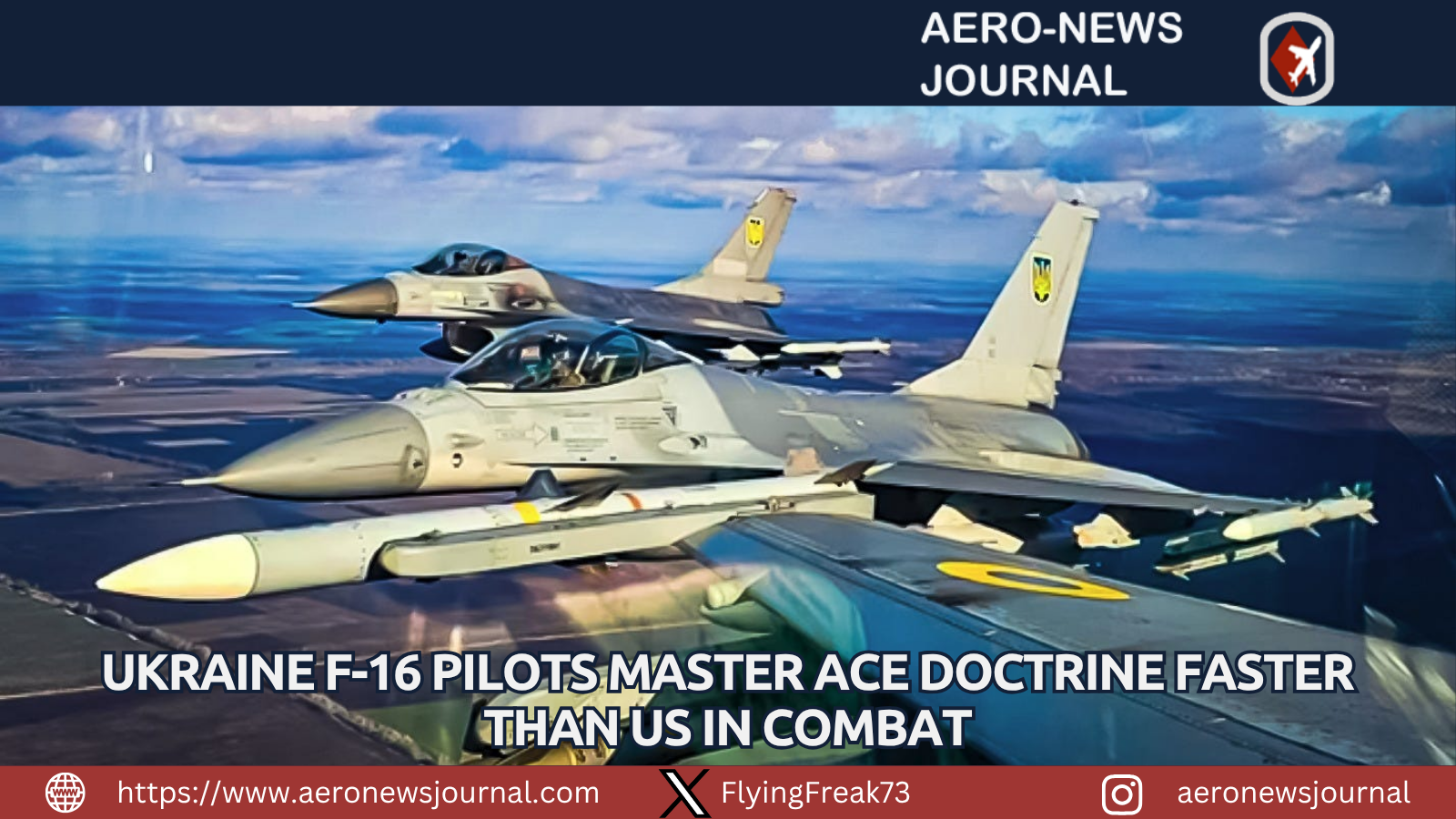
Operational experience has refined Ukrainian tactics and weapons use, with F-16s and Mirage 2000-5s achieving strong results intercepting cruise missiles since early 2025. Fighting Falcons have reportedly downed more than 2,500 Geran- and Gerbera-family drones, though high sorties against low-cost targets increase airframe wear and missile consumption. This has led to greater reliance on the 20 mm cannon and AGR-20 rockets, known as APKWS II, to conserve air-to-air missiles for higher-value targets. In July 2026, a Ukrainian F-16 achieved the first confirmed destruction of a Russian Su-35 fighter, marking a milestone despite radar and missile range differences plus Russian long-range air defenses near the front.
Ukraine continues substantial aircraft integration, with official commitments from the Netherlands, Denmark, and Norway totaling 49 F-16s: 24 Dutch, 19 Danish, and six Norwegian, all transferred by 2025 though some needed further preparation. Belgium plans to deliver seven F-16s by late 2026, with three for operations and four for spare parts, as part of a potential gradual transfer of up to 53 aircraft by 2029 tied to its F-35A transition.

Ukraine’s combat aviation modernization extends beyond F-16 fighters, as Sweden confirms transfer of up to 16 JAS 39 Gripen C/D fighters expected in early 2027, possibly with Meteor missiles, plus an agreement for 16 Gripen E fighters starting deliveries in 2029. Two years on, the F-16 remains the central pillar while Gripens will further reduce dependence on Soviet platforms.